The Wild Grape That Tastes Like Childhood — And Still Grows in Your Backyard
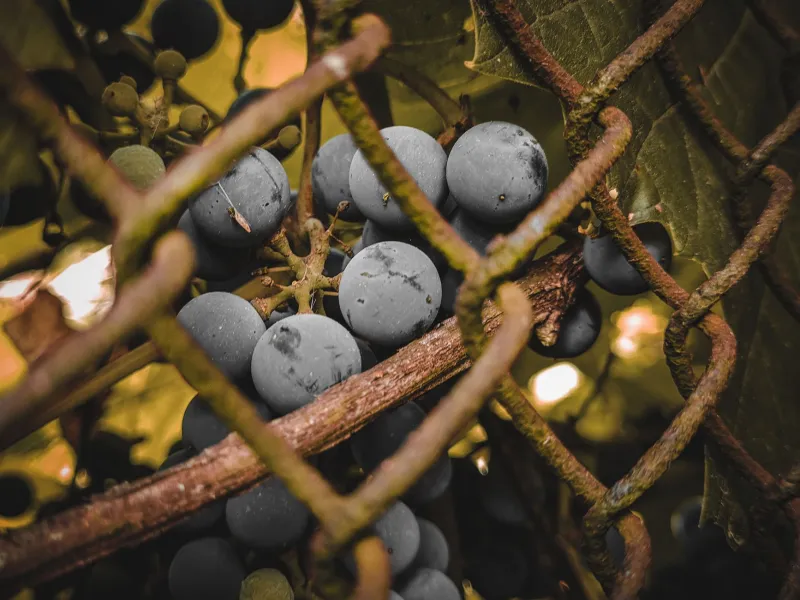
The Grape That Built the South
Driving through rural Georgia, North Carolina, or Virginia in late summer, you'll spot them everywhere: thick, twisted vines climbing telephone poles and fence posts, heavy with clusters of purple-bronze grapes the size of ping-pong balls. Most people assume they're just weeds. They're actually sitting on one of America's most historically important fruits — and they have no idea.
Muscadine grapes (Vitis rotundifolia) once dominated the Eastern seaboard from Delaware to Florida. Unlike the delicate European wine grapes that require careful cultivation, muscadines are survivors. They laugh at humidity, shrug off diseases that kill other vines, and produce fruit with a flavor so distinctive that early colonists described it as "nature's grape soda."
The Cherokee had been harvesting wild muscadines for over a thousand years before Europeans arrived. They dried them into portable trail food, fermented them into ceremonial wines, and used the leaves for medicinal teas. When English settlers landed in the 1580s, they found muscadine vines so abundant that explorer Arthur Barlowe wrote they grew "on the sand and on the green soil, on the hills, as on the plains."
The Fruit That Fed a Revolution
During the Revolutionary War, muscadines kept American forces fed when supply lines failed. The thick-skinned grapes stored well without refrigeration and packed enough natural sugars to sustain soldiers on long marches. Thomas Jefferson, ever the agricultural experimenter, tried cultivating muscadines at Monticello — though he never quite mastered their wild temperament.
But muscadines had a marketing problem: they were too American.
As the young nation developed its cultural identity, anything European carried prestige. French wine grapes meant sophistication. English apples suggested refinement. Native muscadines, no matter how practical or delicious, felt too... common. Too wild. Too much like something you'd find growing behind a barn.
By the 1800s, agricultural colleges were teaching farmers to replace native muscadines with imported grape varieties that required more work, more chemicals, and more money — but produced wine that sounded impressive at dinner parties.
The Taste That Time Forgot
Here's what those early colonists meant by "grape soda": muscadines don't taste like wine grapes. They're sweeter, more intense, with a flavor that hits somewhere between Welch's grape juice and a really good Concord grape. The skin is thick and slightly chewy (you eat them by popping the pulp into your mouth and discarding the hull), and each grape contains 2-4 large seeds.
To modern palates accustomed to seedless table grapes, muscadines feel almost prehistoric — which, botanically speaking, they are. They're North America's oldest native grape, genetically distinct from European wine grapes and perfectly adapted to Southern heat and humidity.
The flavor varies dramatically by variety. Scuppernongs (the bronze-colored muscadines) taste like honey mixed with grape juice. Dark purple Noble muscadines pack more tannins and complexity. Wild muscadines found along roadsides often surprise with intense, concentrated flavors that shame anything in the grocery store.
The Quiet Comeback
While mainstream agriculture ignored them, muscadines never disappeared. They kept growing in Southern backyards, along country roads, and in forgotten corners of old farms. Elderly residents of rural communities never stopped making muscadine jelly, wine, and preserves — they just stopped talking about it much.
Now, a small but passionate group of Southern winemakers is betting that muscadines could be America's next great regional wine story. Duplin Winery in North Carolina has been making muscadine wine since 1975 and now produces over 500,000 cases annually. Lakeridge Winery in Florida specializes in muscadine varieties that thrive in subtropical climates where European grapes fail.
 Photo: Duplin Winery, via images-wixmp-ed30a86b8c4ca887773594c2.wixmp.com
These aren't trying to imitate European wines — they're creating something uniquely American. Muscadine wine tastes like concentrated summer: sweet, fruity, and unapologetically bold. It's wine for people who think wine is too fancy, and it's quietly finding audiences from Texas to Virginia.
Hidden in Plain Sight
The strangest part of the muscadine story? You've probably been driving past them your entire life without noticing. They're everywhere in the South — climbing trees in suburban neighborhoods, sprawling over abandoned buildings, thriving in roadside ditches.
Unlike cultivated grapes that need perfect conditions, muscadines are almost weedy in their persistence. They'll grow in poor soil, tolerate drought, and produce fruit for decades without human intervention. In late August and September, when the grapes ripen, you can often smell their sweet perfume from a moving car.
Next time you're driving through the South in late summer, pull over when you spot those thick vines heavy with purple clusters. Pop a few grapes in your mouth (assuming you're not on private property) and taste what America used to eat before we decided European was better.
You might just understand why the Cherokee considered them sacred, why colonists built settlements around muscadine groves, and why a growing number of Southern winemakers think the future of American wine might be hiding in roadside thickets, waiting for us to remember what we forgot.