The Garden Weed Thomas Jefferson Ate for Breakfast — and Scientists Are Now Obsessing Over
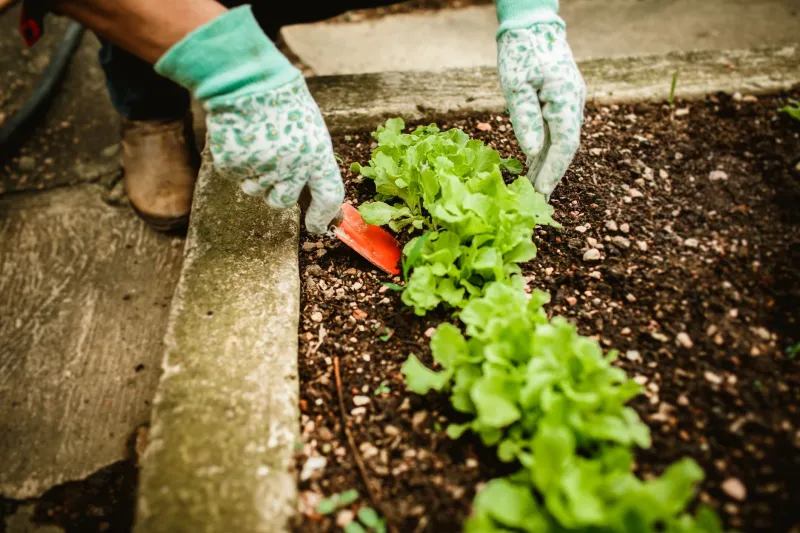
Somewhere in your garden right now — almost certainly — there is a plant you've been yanking out and throwing away. It grows flat against the soil, spreads in dense mats, has small paddle-shaped leaves, and produces tiny yellow flowers if you leave it alone long enough. You probably know it as a nuisance. Your great-great-grandmother knew it as dinner.
 Photo: Thomas Jefferson, via i.ebayimg.com
Meet purslane. And once you know what it is, you're going to feel a little foolish about all those hours you spent weeding.
The Weed With a Résumé
Purslane (Portulaca oleracea) has been eaten by humans for thousands of years across cultures from Persia to India to ancient Rome. It arrived in North America early — some botanists believe it came over with European colonists, though others argue a native variety was already present — and for most of American history, it was a completely unremarkable part of the edible landscape. Unremarkable in the best way: the kind of food that was simply always there, always available, and always useful.
Frontier apothecaries stocked it as a remedy for inflammation, digestive trouble, and what period texts vaguely described as "heat of the blood" — a catch-all category that likely covered everything from fevers to skin irritation. Herbalists recommended it in poultice form for burns and insect stings. In kitchen gardens from Virginia to the Ohio frontier, it showed up alongside lettuces and herbs as a standard salad green.
Thomas Jefferson, who was famously obsessive about his kitchen garden at Monticello and documented his plantings in extraordinary detail, listed purslane in his garden records as a cultivated green. Not a weed he tolerated. A crop he grew on purpose.
How It Vanished
So what happened? How did a plant that Jefferson cultivated and frontier apothecaries stocked end up classified in the American mind as a garden pest?
The short answer is that the American food system got more centralized, more standardized, and dramatically less interested in anything that couldn't be grown at industrial scale, packaged, and shipped. Purslane doesn't hold up well in transit. It wilts fast, looks unimpressive in a produce bin, and has no natural lobby group advocating for its shelf space at the grocery store.
The longer answer involves a broader cultural shift away from foraging and kitchen garden literacy that happened gradually through the late 19th and early 20th centuries. As processed and packaged foods became status symbols of modernity and convenience, eating things you pulled out of the ground — especially things that also grew as weeds — started to feel old-fashioned. Rural. Poor.
By the mid-20th century, purslane had completed its demotion from table green to nuisance weed. Most Americans alive today have never tasted it intentionally.
What the Labs Found
Here's where the story gets genuinely interesting.
In the 1980s and 1990s, nutritional researchers began systematically analyzing wild and semi-wild edible plants for their fatty acid profiles. What they found in purslane stopped more than a few scientists cold.
Purslane contains alpha-linolenic acid — a plant-based omega-3 fatty acid — at concentrations that are, by some measurements, the highest ever recorded in a leafy plant. We're talking about levels that rival flaxseed, a plant that the health food industry has built an entire product category around. Some analyses found that purslane contained five to seven times more omega-3s than spinach.
It's also rich in vitamins A, C, and E, contains meaningful amounts of magnesium and potassium, and has a melatonin content that researchers found unexpectedly high for a leafy green — a detail that prompted a small flurry of studies around sleep and circadian rhythm in the early 2000s.
More recently, research published in nutritional biochemistry journals has been examining purslane's betalain pigments — the compounds that give it a slightly reddish tinge — for antioxidant and anti-inflammatory properties. The results are preliminary, but they're consistent enough that several university research programs have ongoing purslane studies right now.
None of this means purslane is a miracle cure. Scientists are careful about that language, and rightly so. But it does suggest that the 19th-century apothecaries who stocked it for its anti-inflammatory properties weren't entirely wrong. They just didn't have the molecular biology to explain why.
What It Actually Tastes Like
Fair question. The answer is: better than you'd expect from something growing between your tomato plants.
Purslane has a mild, slightly lemony flavor with a faint crunch and a subtle mucilaginous quality — that same pleasant thickness you get from okra or chia seeds, though much less pronounced. Raw, it works beautifully in salads, particularly with acidic dressings. Lightly sautéed in olive oil with garlic, it becomes something genuinely delicious. In parts of Mexico and the Middle East, where purslane never fell out of culinary favor, it's a standard ingredient in soups, stews, and braised dishes.
Chefs at a handful of farm-to-table restaurants in the US have started featuring it intentionally — partly as a sustainability story, partly because it actually tastes good, and partly because there's something undeniably appealing about serving a dish built around an ingredient your customers have been throwing away all summer.
Go Check Your Garden
Purslane is almost certainly growing somewhere near you right now. It loves disturbed soil, warm temperatures, and full sun — which is to say, it loves vegetable gardens. It's most abundant from late spring through early fall across most of the US.
Identification is straightforward: flat-growing, succulent-looking stems, small rounded leaves, reddish at the nodes, and that characteristic mat-like spread. If you're uncertain, a quick image search will confirm it in seconds.
The next time you find it, maybe don't throw it in the compost pile quite so fast. Jefferson grew it on purpose. The apothecaries stocked it for a reason. And the scientists are just now catching up to what they both seemed to know.