Your Farmhouse Was Designed to Let You Sleep in the Afternoon — Then We Forgot How
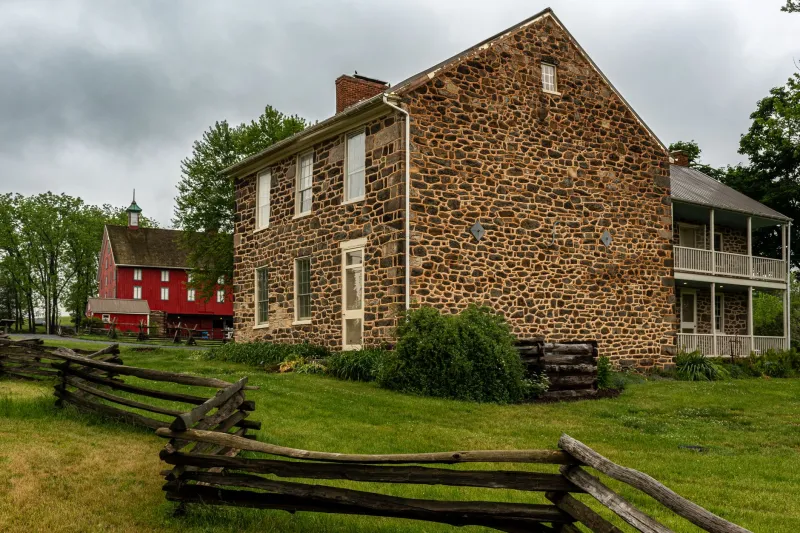
Next time you drive past one of those wide-porched farmhouses out in rural Ohio or the Carolinas, look up. See that screened upper deck off the second story? The one that looks like a forgotten sunroom? That wasn't storage space. That was a bedroom — specifically engineered for sleeping during the hottest part of a summer afternoon.
For most of American history, that wasn't unusual. It was just smart building.
The Architecture Nobody Talks About
Through much of the 19th and early 20th centuries, American farmhouse design quietly incorporated what builders called sleeping porches — elevated, screened, cross-ventilated outdoor rooms attached to the upper floors of a home. Some were modest, barely wider than a cot. Others stretched the full length of a house, designed to accommodate an entire family during the brutal heat of July and August.
But sleeping porches were only part of the picture. Preservation architects who specialize in vernacular American buildings — the ordinary houses regular people actually lived in — have documented a whole constellation of sleep-oriented design choices that most modern homeowners never notice.
Shaded alcoves tucked into the north-facing walls of a house. Lofts with deliberately positioned vent gaps between floorboards to draw cool air upward from the ground floor. Deep overhanging eaves calculated to block the afternoon sun at exactly the angle it hits in midsummer. These weren't accidents. They were intentional.
"People think of old farmhouses as being built by farmers, not architects," says one preservation specialist who has spent years documenting 19th-century rural homes in the Midwest. "But the farmers who built them understood thermodynamics in a completely practical way. They knew when the body needed rest and they built the house around that."
A Culture That Took Rest Seriously
Here's the part that surprises most people: the architectural choices weren't just about staying cool. They reflected a broader cultural assumption about how a working day was supposed to flow.
In pre-industrial America, agricultural labor operated around the heat of the day. You worked hard in the early morning. You rested — actually rested, often slept — during the peak afternoon hours. Then you returned to work in the cooler late afternoon and evening. This wasn't laziness. It was efficiency, and the homes were literally built to support it.
The sleeping porch made this rhythm possible. You could retreat from the blazing midday sun to a breezy upper-floor perch, sleep for an hour, and return to the fields genuinely refreshed. The architecture wasn't incidental to that habit. It enabled it.
This pattern shows up in diaries, letters, and household management guides from the era with remarkable consistency. An 1876 farming almanac from Indiana explicitly recommends a midday rest of no less than forty-five minutes during harvest season, noting that "a man who rests at noon will outwork two who do not by the week's end." That wasn't a health tip. It was common knowledge.
What Killed the Sleeping Porch
The answer, predictably, is progress — or at least two specific flavors of it.
Electric lighting arrived first, stretching the usable workday into the evening and quietly dismantling the logic of the midday pause. If you could work after dark, the pressure to rest at noon evaporated. Then came residential air conditioning in the postwar decades, which made the sleeping porch's ventilation function obsolete almost overnight. Why bother with a screened upper deck when a window unit could cool any room in the house?
By the 1960s, sleeping porches were being enclosed and converted into spare bedrooms, sewing rooms, or just walled off entirely. The architectural feature disappeared faster than the cultural habit that had created it — and within a generation, most Americans had forgotten both existed.
New suburban construction never bothered to include them. Why would it? The assumption built into every ranch house and split-level of the postwar boom was that sleep happened at night, in a sealed, climate-controlled bedroom, and that was that.
The Quiet Revival
A small but growing group of architects and custom home builders is starting to push back on that assumption — and they're looking directly at those old farmhouses for inspiration.
The revival isn't purely nostalgic. It's being driven in part by a renewed interest in passive cooling design, as energy costs rise and climate change makes summers in much of the US meaningfully hotter than they were a generation ago. A well-designed sleeping porch or ventilated loft can reduce a home's cooling load significantly, and it does it without a compressor or a utility bill.
But there's a human element too. Some designers are explicitly framing these spaces around the idea of supporting a midday rest — a dedicated, architecturally intentional space for the kind of restorative afternoon sleep that the old farmhouses were built around.
A handful of custom home projects in Vermont, Tennessee, and the Pacific Northwest have already incorporated modern interpretations of the sleeping porch concept — screened upper decks with ceiling fans, shaded north-facing alcoves off master bedrooms, even ventilated outdoor sleeping platforms built into hillside homes.
None of it is mainstream yet. But the idea that your home could be designed around how human bodies actually function, rather than just around what's cheapest to build, is gaining traction in ways it hasn't in decades.
The House Knew Something We Forgot
There's something quietly humbling about standing on an old farmhouse sleeping porch and realizing that the person who built it — probably without a formal education in architecture or sleep science — understood something that most modern home design completely ignores.
The body wants to rest in the afternoon. It has for as long as there have been bodies. The old houses were built around that fact. Ours mostly aren't.
Maybe the most offbeat discovery here isn't the sleeping porch itself. It's the realization that sometimes the oldest, most practical knowledge gets buried not because it was wrong, but simply because something shinier came along and everyone forgot to look back.