A Man Who Couldn't Read Invented a Writing System That Gave His Entire Nation Literacy in a Decade

Photo by Chris Linnett on Unsplash
A Man Who Couldn't Read Invented a Writing System That Gave His Entire Nation Literacy in a Decade
There's a short list of individuals in recorded history who invented a writing system entirely on their own. Most writing systems — the alphabet you're reading right now, the characters used in Chinese, the script used in ancient Egypt — evolved over centuries, developed by communities, refined by generations of scribes and scholars. Creating one from scratch, as a solo project, is considered so cognitively extraordinary that linguists have a specific term for it: a unitary invention.
Sequoyah did it in his spare time.
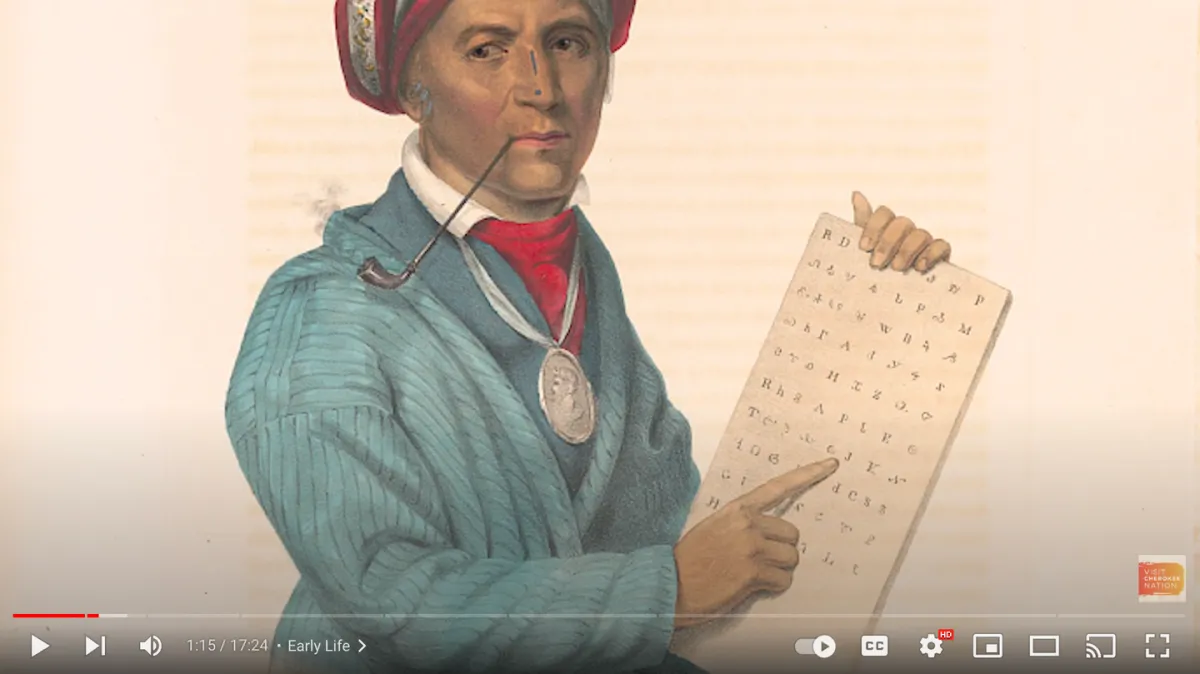 Photo: Sequoyah, via thumbs.peoplesgdarchive.org
He was a Cherokee silversmith and trader living in what is now Tennessee and Alabama. He had no formal education. He could not read or write English, or any other language. He had never studied linguistics. And somewhere around 1809, watching white settlers use paper to communicate across distances — what he reportedly called "talking leaves" — he decided to figure out how they did it.
What followed is one of the most remarkable intellectual achievements in American history. Almost nobody knows about it.
The Decade-Long Obsession
Sequoyah's first instinct was to create a symbol for every word in the Cherokee language. He spent years on this approach, filling pages with thousands of hand-drawn characters. His neighbors thought he was losing his mind. His wife, by some accounts, burned his early work in frustration, convinced he was practicing witchcraft.
He started over.
On his second attempt, Sequoyah had a breakthrough insight that completely changed his approach. Instead of representing whole words — which would require an unmanageable number of symbols — he would represent syllables. Cherokee, it turned out, was well-suited to this. The language's sounds could be organized into a relatively compact set of syllabic units. Sequoyah eventually landed on 86 characters, each representing a distinct syllable sound in the Cherokee language.
The result was what linguists call a syllabary — not quite an alphabet (which represents individual sounds), but a system that works on similar principles and is arguably easier to learn. Where mastering English spelling can take years, the Cherokee syllabary can be learned in a matter of days. The logic is consistent and the characters are distinct. Once you know the 86 symbols, you can read and write anything in Cherokee.
Sequoyah completed the system around 1821. He was approximately 45 years old.
The Demonstration That Changed Everything
Getting his own people to believe in the system was a separate challenge. Sequoyah's reputation as an eccentric had preceded him, and Cherokee leaders were initially skeptical. To prove the system worked, he staged a demonstration that sounds almost theatrical in retrospect.
He sent his young daughter Ayoka to one room while he met with a group of tribal leaders in another. He asked the leaders to speak sentences aloud — anything they wanted — and he wrote them down. Ayoka was brought in and read them back perfectly. Then the roles reversed. Sequoyah left the room, Ayoka wrote down what the leaders said, and Sequoyah read it back without hesitation.
The leaders were convinced. The Cherokee Nation formally adopted the syllabary, and what happened next was genuinely astonishing.
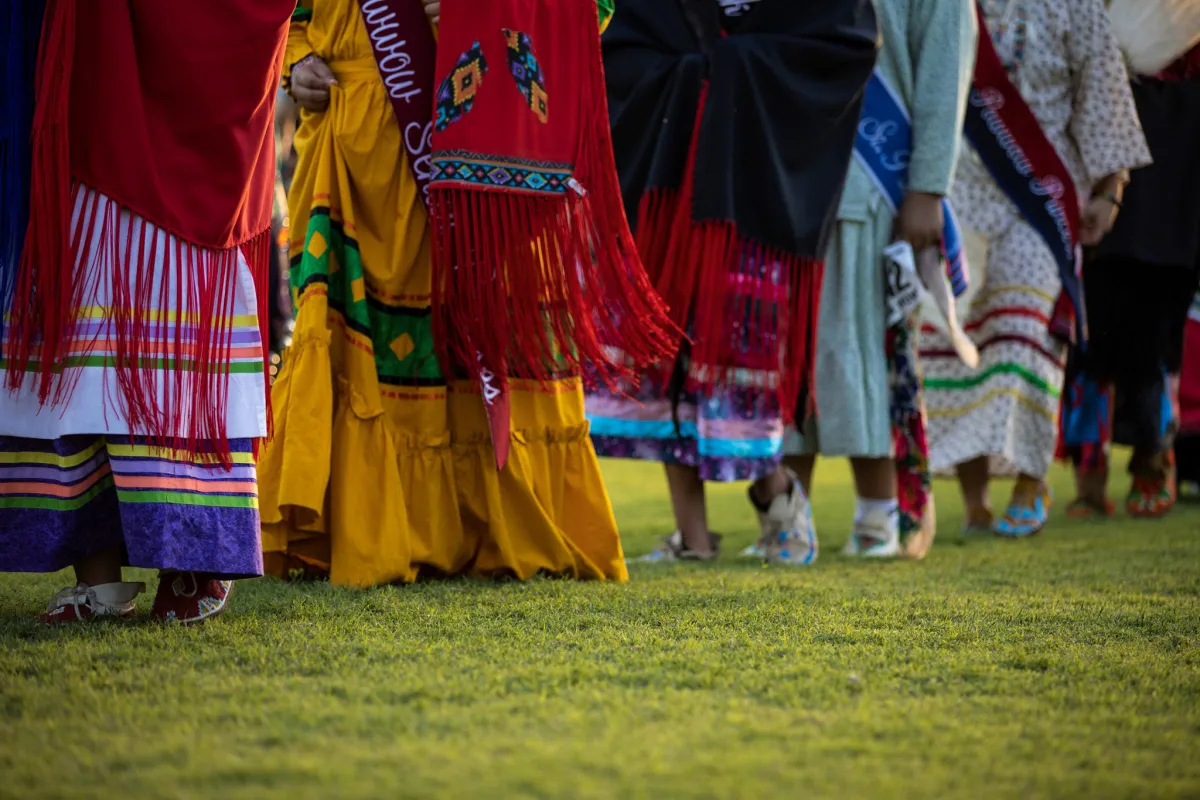 Photo: Cherokee Nation, via indianz.com
The Literacy Explosion
Within roughly a decade of the syllabary's adoption, the Cherokee Nation had achieved literacy rates that exceeded those of the surrounding white American population. This wasn't a slow, generational shift. It was a near-instantaneous cultural transformation.
Because the syllabary was so logical and learnable, literate Cherokees taught family members, who taught neighbors, who taught entire communities. People who learned the system on a Monday were teaching it to others by the following weekend. The knowledge spread organically, person to person, with a speed that stunned outside observers.
In 1828, just seven years after Sequoyah completed his writing system, the Cherokee Nation launched The Cherokee Phoenix — the first Native American newspaper published in the United States. It ran articles in both Cherokee and English, side by side, and covered everything from political news to farming advice. It was a genuinely professional publication, and it existed because an entire nation had become literate in a timeframe that should have been impossible.
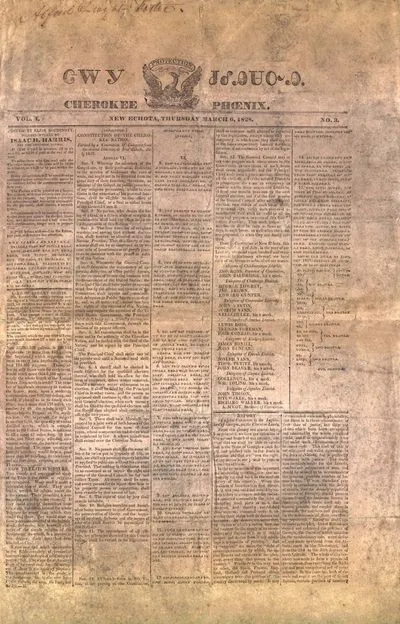 Photo: The Cherokee Phoenix, via cdn.britannica.com
What Linguists Say About This
Modern linguistics professors who study the Cherokee syllabary tend to describe Sequoyah's achievement in terms that don't leave much room for understatement. The cognitive task he completed — independently conceptualizing the idea that language could be broken into repeating sound units, then systematically identifying and representing all of those units in a new visual system, without any training or external model to work from — is considered one of the most remarkable individual intellectual feats in documented human history.
For context: most writing systems that exist today are derived from earlier systems. The letters you're reading right now trace back through Latin to Greek to Phoenician script. Sequoyah had no ancestral system to borrow from. He built from zero.
The syllabary he created is still in use today. The Cherokee Nation in Oklahoma uses it in schools, on road signs, and in official documents. Apps and keyboard extensions exist to type in Cherokee script. The language, which was endangered for much of the 20th century, has seen revitalization efforts that rely heavily on the writing system Sequoyah invented two centuries ago.
A Legacy That Deserves More Space
Sequoyah's name is attached to the giant sequoia trees of California — a tribute applied after his death because naturalists wanted to honor someone they considered a singular genius. There's a county in Oklahoma named for him. But outside of Cherokee communities and a narrow slice of academic linguistics, his story remains largely unknown to mainstream American audiences.
That's a strange kind of oversight. In a culture that celebrates innovation and individual achievement almost obsessively, the man who single-handedly gave an entire nation the ability to read and write — starting from nothing, working alone, facing ridicule from his own community — deserves to be a household name.
He invented something that outlasted him by two centuries and is still being used today. That's not a footnote. That's a legacy.