The Vermont Town That Became America's Maple Syrup Speakeasy Capital
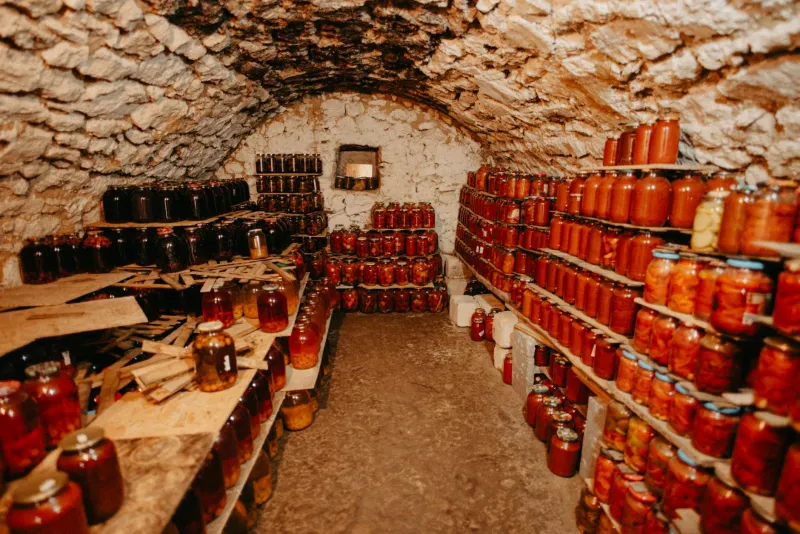
The Vermont Town That Became America's Maple Syrup Speakeasy Capital
You probably think maple syrup regulation is about as exciting as watching paint dry. But in the hills of Vermont during the 1940s and 50s, syrup grading laws sparked an underground economy so elaborate that it included secret distribution networks, coded language, and enough creative rule-bending to make bootleggers proud.
Welcome to the story of America's most polite rebellion — and the small town that accidentally became the maple syrup equivalent of a speakeasy.
When Uncle Sam Came for the Syrup
It started innocently enough. In 1944, the USDA introduced strict federal grading standards for maple syrup, designed to protect consumers from inferior products and ensure consistent quality across interstate commerce. Grade A syrup had to meet specific color, flavor, and clarity standards. Anything that didn't make the cut was relegated to Grade B or, worse, deemed unfit for retail sale.
For Vermont's maple farmers, this created an immediate problem. The new standards were so rigid that up to 40% of their annual production — perfectly good syrup that families had been enjoying for generations — suddenly couldn't be sold legally in stores.
What were farmers supposed to do with thousands of gallons of "substandard" syrup that tasted just fine?
They got creative.
The Birth of the Syrup Underground
In the tiny town of Peacham, Vermont (population barely 500), farmer Elias Carpenter made a discovery that would reshape the local economy. His Grade B syrup — darker, more robust, and full of the complex flavors that cooking enthusiasts actually preferred — was in high demand among his neighbors. People didn't just want it; they were willing to pay premium prices for it.
 Photo: Peacham, Vermont, via justporn.to
The problem was selling it legally. Grade B syrup could only be sold wholesale to food manufacturers, not directly to consumers. But Carpenter found a loophole: there was nothing stopping him from "giving away" syrup to friends who happened to leave donations for his "farm maintenance fund."
Word spread quickly through Vermont's tight-knit farming community. Soon, farmers across the state were operating similar "donation" systems, moving their off-grade syrup through informal networks that operated parallel to legitimate retail channels.
The Maple Syrup Mafia Gets Organized
By 1950, what had started as neighborly favor-trading had evolved into something much more sophisticated. Peacham became the unofficial headquarters of what locals jokingly called the "Maple Mafia" — a loose confederation of farmers who had turned syrup bootlegging into an art form.
The operation was remarkably well-organized. Farmers developed a coded language for discussing transactions over party-line telephones ("dark amber" meant Grade B, "cooking grade" meant the really good stuff that failed inspection entirely). They established regular delivery routes that looked like innocent farm visits but were actually distribution runs.
Most ingeniously, they created a system of "syrup clubs" — groups of customers who paid annual "membership fees" and received regular "gifts" of premium off-grade syrup. Technically, no retail sales were happening. In practice, discerning syrup lovers across New England were getting access to products they couldn't buy in any store.
The Economics of Sweet Rebellion
The numbers behind Vermont's syrup underground were staggering. Conservative estimates suggest that by the mid-1950s, nearly 30% of Vermont's maple syrup was being distributed through unofficial channels. That represented hundreds of thousands of gallons annually — and millions of dollars in unreported economic activity.
The irony wasn't lost on anyone involved: the government's attempt to protect consumers from "inferior" syrup had created a black market for products that were often superior to what was legally available. Grade B syrup, with its deeper flavor and higher mineral content, was exactly what serious cooks wanted. But federal regulations had made it essentially contraband.
Farmers found themselves in the peculiar position of making more money from their "illegal" syrup than their legal product. Some openly joked that they were considering deliberately failing inspections to increase their off-grade production.
The Great Syrup Wars
The USDA wasn't oblivious to what was happening. By 1955, federal inspectors were making regular sweeps through Vermont, trying to crack down on unlicensed syrup sales. What followed was a cat-and-mouse game that would have been hilarious if it weren't so economically significant.
Farmers developed elaborate early warning systems. When inspectors were spotted in one town, word would spread by telephone and CB radio to farms throughout the region. Illegal syrup would disappear into root cellars and barn lofts. Sales records would be hastily hidden or destroyed.
The inspectors, for their part, seemed to understand they were fighting a losing battle. Most were sympathetic to the farmers' plight — they could see that the "illegal" syrup was often higher quality than what was being sold in stores. But federal law was federal law.
The situation reached peak absurdity in 1957, when a federal inspector in Peacham discovered a farmer selling Grade B syrup at a church fundraiser. The resulting legal case — United States v. Carpenter (no relation to the earlier Elias Carpenter) — became a minor cause célèbre in Vermont, with local newspapers running editorials about government overreach and the right to sell syrup.
The Quiet Revolution That Changed Everything
The Vermont syrup underground might have continued indefinitely, but two things changed the game. First, consumer tastes were evolving. By the 1960s, food magazines and cooking shows were celebrating the complex flavors of darker syrups that the USDA had relegated to industrial use.
Second, Vermont's congressional delegation — led by Senator George Aiken — began pressuring the USDA to revise its grading standards. The argument was simple: federal regulations were hurting Vermont farmers while depriving consumers of products they actually wanted.
 Photo: George Aiken, via image.rakuten.co.jp
In 1962, the USDA quietly revised its standards, creating new categories that allowed much of what had been "illegal" syrup to be sold legally as specialty products. The change was announced with little fanfare, but it effectively ended Vermont's maple syrup prohibition.
The Sweet Legacy of Civil Disobedience
Today, Vermont's artisanal syrup industry — with its emphasis on small-batch production and complex flavor profiles — can trace its roots directly to the underground networks of the 1950s. The farmers who figured out how to market "illegal" syrup to discerning customers laid the groundwork for today's premium maple products market.
More broadly, the Vermont syrup underground represents a fascinating case study in how communities respond when federal regulations clash with local knowledge and tradition. The farmers weren't trying to cheat consumers or evade taxes — they were trying to sell products they knew were good to customers who wanted them.
The fact that this entire episode has been almost completely forgotten speaks to how we remember resistance movements. We celebrate dramatic confrontations and famous protests, but we overlook the quiet, persistent ways that communities work around laws that don't make sense.
Somewhere in rural Vermont, there are probably still farmers who remember when selling dark amber syrup required the kind of discretion usually associated with moonshine. They turned their state into America's most polite speakeasy capital — and proved that sometimes the sweetest rebellion is the kind that happens one breakfast at a time.