Before the Fridge, American Kitchens Were Running Sophisticated Food Science — And We Forgot All of It
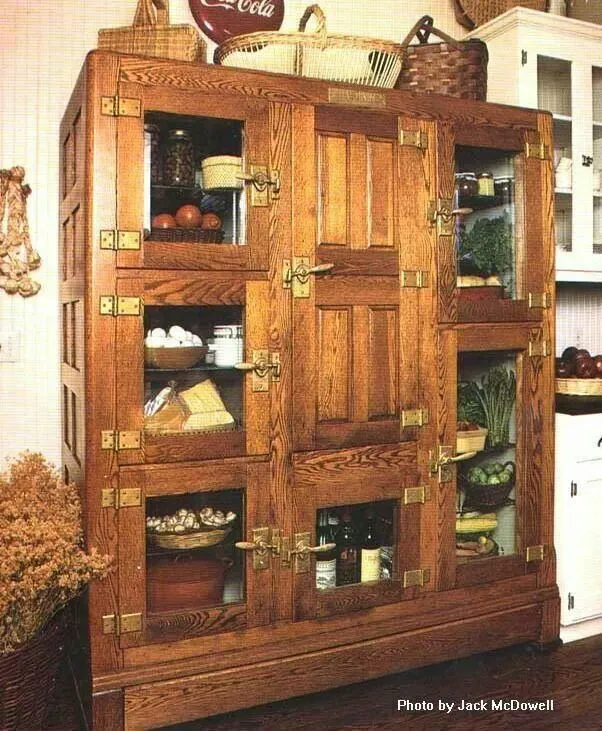
Photo: vintage icebox kitchen food preservation old fashioned pantry cellar, via i.pinimg.com
The refrigerator is so embedded in American domestic life that it's almost impossible to imagine a kitchen without one. But for most of American history — up through the 1940s for many rural households — the icebox was the ceiling of cold storage technology, and below that ceiling, home cooks had developed a body of practical food knowledge that was sophisticated, field-tested, and quietly remarkable.
Then the electric refrigerator arrived, and within a generation, most of that knowledge was gone. Not disproven. Not replaced with something better. Just... forgotten, because it suddenly seemed unnecessary.
Food scientists are starting to look back at what got lost — and some of what they're finding is genuinely surprising.
The Icebox Wasn't Just a Smaller Fridge
People tend to picture the pre-refrigeration icebox as a crude, leaky ancestor of the modern appliance — a box with a chunk of ice in it, doing its best. The reality was more nuanced.
A well-managed icebox in a competent household operated according to rules that its users understood intuitively, even if they couldn't have articulated the food science behind them. The ice compartment was typically at the top, which meant cold air fell — and experienced homemakers knew exactly which foods needed to sit closest to that falling cold and which could safely occupy the warmer lower shelves. Cooked meats went high. Root vegetables stayed low. Dairy occupied specific positions based on how quickly it would turn.
More importantly, the icebox ran warmer than a modern refrigerator — typically between 45 and 55 degrees Fahrenheit rather than the 35 to 38 degrees of a standard modern unit. That temperature difference turns out to matter more than anyone appreciated at the time.
Why Colder Isn't Always Better
Here's the part that tends to surprise people: for a significant range of foods, modern refrigerator temperatures are actually too cold.
Tomatoes stored below 50 degrees Fahrenheit undergo cellular damage that permanently alters their flavor and texture — a fact that food scientists have confirmed repeatedly in the last two decades, but that your great-grandmother could have told you without a laboratory. She kept tomatoes on the counter or in a cool pantry, not in the icebox. Not because she didn't have the space, but because experience had taught her the result was better.
The same principle applies to potatoes, onions, garlic, stone fruits, avocados, and a range of other produce. Modern refrigerators, optimized for safety and maximum cold, are actually degrading the flavor and texture of a substantial portion of what we put in them. The icebox era, running warmer, was inadvertently better calibrated for a lot of these foods.
The Salt Crock and the Brine Tradition
Before refrigeration, salt was the primary preservation technology in the American home kitchen — and the methods built around it were considerably more refined than just dumping salt on something and hoping for the best.
The salt crock was a ceramic vessel used to preserve vegetables, eggs, and certain meats in brine solutions that were carefully maintained and sometimes passed down through families like heirlooms. The brine ratios were calibrated by taste and experience — too little salt and food spoiled, too much and it became inedible. Experienced cooks could assess a brine by feel and smell in ways that took years to develop.
What they were doing, without knowing the terminology, was lacto-fermentation — the same process that produces sauerkraut, kimchi, and traditional pickles. The salt created an environment where beneficial lactobacillus bacteria could thrive and outcompete pathogens, producing lactic acid that preserved the food and, crucially, transformed its flavor in ways that are now considered culinary virtues rather than necessity.
Modern fermentation researchers have documented that properly lacto-fermented vegetables contain probiotic bacteria, higher bioavailable nutrient levels, and flavor compounds that straight refrigeration simply doesn't produce. The salt crock wasn't a workaround for the absence of better technology. It was, in several measurable ways, producing a superior product.
Root Cellars and the Humidity Variable
The root cellar gets romanticized a lot — earthen floors, wooden shelves, jars of preserved summer. But behind the nostalgia was a genuinely sophisticated understanding of the relationship between temperature, humidity, and food longevity that most modern refrigerators don't replicate well.
A well-built root cellar maintained temperatures between 32 and 40 degrees with humidity levels around 90 to 95 percent — conditions that kept root vegetables, apples, and certain cheeses in a kind of suspended animation for months. Modern refrigerators run at roughly 30 to 50 percent relative humidity, which is efficient for preventing bacterial growth but actively desiccates the foods sitting inside them. That's why refrigerated carrots go limp and refrigerated apples go mealy — they're slowly drying out in an environment that's colder but drier than what they actually need.
Some contemporary food storage advocates and small-scale farmers have started building modern root cellars again, not out of nostalgia but because the results for long-term vegetable storage are measurably better than refrigeration. A properly cellared apple in October can still be good eating in February. A refrigerated apple typically won't make it past six weeks without quality loss.
What Getting a Refrigerator Actually Cost Us
None of this is an argument against refrigeration. Modern cold storage has prevented an incalculable amount of foodborne illness and made fresh food accessible in ways the pre-refrigeration world couldn't have imagined.
But the transition happened fast — faster than anyone had time to evaluate what was worth keeping. The electric refrigerator was marketed aggressively in the 1930s and 1940s as a complete solution, a replacement for all the old methods rather than a complement to some of them. Homemakers who adopted it were, in many cases, quietly abandoning techniques that had taken generations to develop, in exchange for the convenience of a single appliance.
The knowledge that got lost wasn't superstition or folk remedy. It was applied food science, developed empirically over a very long time, by people who had strong incentives to get it right. Some of it is worth recovering — not to give up the refrigerator, but to stop treating it as the only answer to every food storage question.
Your grandmother probably knew which shelf the cheese went on and why. It might be worth asking.