Before the Little White Pill: The Plant Remedies American Doctors Swore By — And Scientists Are Quietly Revisiting
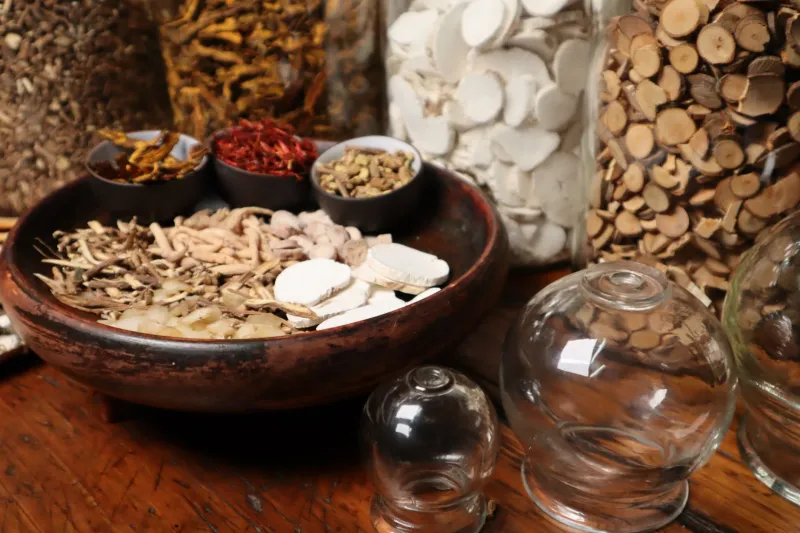
Imagine walking into a doctor's office in 1880 with a splitting headache and a fever. Your physician doesn't reach for a bottle of tablets. Instead, he hands you a paper packet of dried bark and tells you to steep it like tea. You'd probably think he'd lost his mind. But that doctor would have been practicing cutting-edge medicine — and he wouldn't have been wrong.
Aspirin as we know it didn't exist until 1899, when Bayer's chemists stabilized acetylsalicylic acid into a commercially viable powder. Before that watershed moment, American physicians worked with what the land provided. And for generations, what the land provided was surprisingly effective.
The Bark That Started It All
Willow bark is the origin story hiding in plain sight. Indigenous peoples across North America had used it for centuries to bring down fevers and dull aches, and European settlers quickly adopted the practice after watching it work. By the mid-1800s, it had moved from folk remedy into formal medical texts.
The reason it worked is the same reason aspirin works: salicin. When your body metabolizes salicin, it converts it into salicylic acid — the chemical cousin of aspirin's active ingredient. The effect is real, measurable, and documented. A 2015 review published in Phytotherapy Research confirmed that willow bark extract produced meaningful pain relief in patients with lower back pain, comparable to low-dose aspirin in some cases.
The difference between willow bark and the Bayer tablet sitting in your medicine cabinet is mostly one of delivery speed and dosage precision. The bark works slower and softer. For a 19th-century doctor who couldn't pop to a pharmacy, that was perfectly acceptable.
Meadowsweet: The Forgotten Fever Flower
Willow bark gets most of the historical credit, but meadowsweet — a frothy white wildflower that blooms across damp American meadows — was arguably just as important to pre-pharmaceutical medicine. It also contains salicylates, and 19th-century physicians used it specifically for stomach complaints and fevers.
Here's the ironic twist: when Bayer chemists were developing aspirin, they actually named it partly after meadowsweet's old botanical name, Spiraea ulmaria. The "spir" in aspirin is a direct nod to that plant. So the flower that aspirin was named after was quietly shelved the moment aspirin arrived. There's something almost poetic about that — and a little unfair.
Modern herbalists have noted something else interesting about meadowsweet: unlike pure salicylic acid, which can irritate the stomach lining, the whole plant contains compounds that appear to buffer that effect. Some researchers think the plant's natural chemistry is more stomach-friendly than the isolated synthetic version. That line of inquiry is still open.
Black Cohosh, Valerian, and the Cabinet of Forgotten Cures
Willow and meadowsweet weren't working alone. Pre-aspirin American medicine had an entire supporting cast of plant-based prescriptions that mainstream pharmacology quietly retired.
Black cohosh — a woodland plant native to eastern North America — was widely used by 19th-century physicians for menstrual pain and what they called "nervous complaints." Today, it's back on shelves in health food stores, and the National Institutes of Health has funded multiple studies examining its effects on menopausal symptoms. The results are mixed but not dismissive. Something is happening there; researchers just haven't fully mapped it yet.
 Photo: National Institutes of Health, via images.ctfassets.net
Valerian root was the era's answer to anxiety and insomnia. Doctors prescribed it in tincture form, and patients used it the way a later generation would reach for a glass of warm milk — or a prescription sedative. Modern sleep researchers have revisited valerian with cautious interest. Small studies suggest it may reduce the time it takes to fall asleep, though the evidence remains inconclusive. What's clear is that it wasn't just a placebo. Its compounds interact with GABA receptors in the brain — the same receptors targeted by some prescription anti-anxiety medications.
Why Did We Walk Away?
The short answer is commerce and convenience. Bayer's aspirin tablet was cheaper to manufacture at scale, easier to dose accurately, and faster-acting than a cup of bark tea. When pharmaceutical companies industrialized medicine in the early 20th century, plant remedies got left behind — not necessarily because they stopped working, but because they couldn't be patented and mass-marketed the same way.
There's also a cultural dimension. As American medicine professionalized, it wanted distance from anything that smelled like folk healing or "old wives' remedies." Plant medicine got swept into that category by association, even when the underlying chemistry was sound.
What's Coming Back Around
Here's where it gets genuinely interesting. The National Center for Complementary and Integrative Health — a division of the NIH — has spent the last two decades funding research into botanical compounds that were standard medicine a century ago. Willow bark extract is being studied for arthritis. Meadowsweet is drawing attention from researchers looking at natural COX inhibitors. Black cohosh has a dedicated clinical trial history.
None of this means you should swap your ibuprofen for a jar of dried bark. Modern pharmacology is more precise, more consistent, and better understood. But the pre-aspirin medicine cabinet turns out to have been less primitive than history suggested. Those 19th-century doctors weren't guessing — they were working with real chemistry, just without the lab equipment to know it.
The plants were always doing something. We just stopped paying attention long enough to forget.