One Small-Town Postmaster's Handwritten List Quietly Launched the Entire Direct Mail Industry

One Small-Town Postmaster's Handwritten List Quietly Launched the Entire Direct Mail Industry
The direct mail industry generates somewhere north of $40 billion annually in the United States. Targeted mailing lists are the invisible infrastructure behind everything from political campaigns to subscription boxes to the catalogs that still show up in your mailbox despite your best efforts. It is, by any measure, a massive and deeply embedded part of American commercial life.
Its origin story, as far as most industry historians are concerned, involves large publishing houses, railroad distribution networks, and visionary catalog entrepreneurs. It almost never mentions a postmaster in rural Ohio named Charles Bennett, working out of a small-town post office in 1887, solving a problem that nobody else had thought to write down.
 Photo: Charles Bennett, via cdn.asianmma.com
It probably should.
The Problem Nobody Had Systematized
To understand what Bennett did, you have to understand what American post offices looked like in the 1880s — particularly in small Midwestern towns.
The volume of periodical mail was exploding. The number of newspapers, agricultural journals, religious weeklies, and general interest magazines circulating through the US postal system had grown dramatically in the years following the Civil War, driven by cheaper printing, expanding rail routes, and a newly literate rural population hungry for information. By the mid-1880s, a postmaster in a town of even modest size might be sorting and distributing dozens of different periodical titles every week.
The system for managing this was, charitably, informal. Subscribers would notify publishers directly, publishers would send bundles, and postmasters would sort it all out by memory and instinct. Misdeliveries were common. Duplicate copies piled up. Residents who had moved, died, or simply changed their minds kept receiving publications they didn't want, while neighbors who desperately wanted a particular farming journal never quite managed to get their subscription sorted.
Bennett, working in his post office in a small community in central Ohio, found this intolerable. He was, by the accounts that survive in regional postal service records and local newspaper mentions from the period, a methodical man with a deep investment in doing his job correctly.
So he built a system.
The List
What Bennett created was, in modern terms, laughably simple. He started a series of handwritten ledgers — one per major periodical category — that recorded each resident's name, their address, which publications they actively wanted, which they had specifically declined, and any relevant notes about delivery preferences. When a new publication became available, he would consult his ledgers before distributing sample copies, sending them only to residents who had expressed interest in that category.
This was, in effect, the first opt-in mailing list in American history. The distinction matters. Before Bennett's system, distribution was essentially broadcast — you sent things to everyone and hoped. Bennett's ledgers introduced the concept of preference-based targeting: the idea that the list of recipients should reflect what people had actually indicated they wanted.
He shared the system with neighboring postmasters through the informal professional networks that postal workers maintained across the region. By the early 1890s, variations of Bennett's ledger method were reportedly in use across several counties in Ohio and had spread into Indiana and Illinois through the same word-of-mouth channels.
The Sears Connection
Here's where the story gets larger than one man's ledger books.
Richard Sears launched his mail-order catalog operation in the mid-1880s, and the early growth of Sears, Roebuck and Co. depended heavily on the postal infrastructure of rural America. The company's famous strategy of targeting rural customers who lacked access to city retailers required, above all else, reliable ways of identifying and reaching people who were likely to buy.
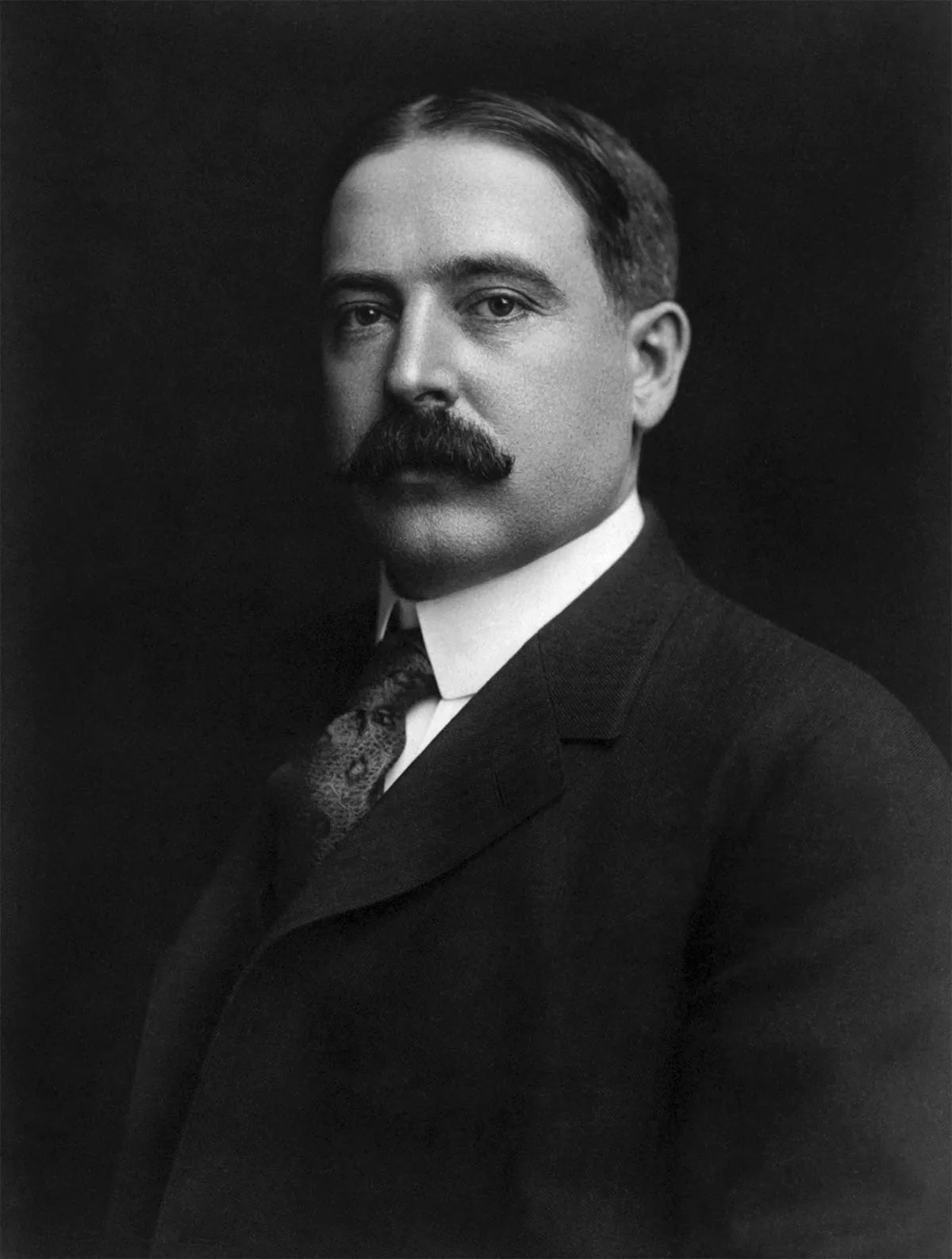 Photo: Richard Sears, via interactive.wttw.com
Postmasters were central to this. Sears and other early mail-order companies actively cultivated relationships with rural postmasters, who were often the best-informed people in a community about who lived where, what they read, and what they were likely to need. Several historical accounts of the early Sears operation describe postmasters functioning as informal local intelligence networks for the catalog business.
Whether Bennett's specific ledger system directly influenced Sears's early customer targeting methods is impossible to prove conclusively. But the timing, geography, and documented spread of his method through the Midwestern postal network places it squarely in the same ecosystem that fed the early mail-order boom. The infrastructure he helped create — the idea that you could maintain a systematic, preference-based record of who wanted what — was exactly the capability that made targeted catalog distribution possible.
Why You've Never Heard of Him
The honest answer is that Bennett never tried to be heard of. He wasn't building a business or seeking a patent. He was a postmaster solving a local problem with the tools he had, and he shared his solution the way practical people shared practical things in that era: informally, person to person, without documentation or credit.
This is an almost perfect example of how enormous industries develop from the ground up. The people at the top of those industries — the Sears executives, the publishing magnates, the eventual direct mail entrepreneurs of the 20th century — get the history because they left behind records, correspondence, and self-promotional material. The postmaster who quietly worked out the underlying logic a decade earlier left behind ledger books that nobody thought to archive.
There's a broader pattern here that's worth sitting with. The innovations that reshape daily life are rarely born in boardrooms or research labs. They tend to start with one specific person, in one specific place, irritated by one specific problem — and methodical enough to write down the solution.
Bennett's ledgers are gone now, almost certainly. But the logic inside them is still running, in one form or another, every time a targeted piece of mail lands in your mailbox.
The Accidental Architect
Direct mail marketers today talk about "list hygiene," "opt-in verification," and "preference-based segmentation" as if these are sophisticated modern concepts. In a technical sense, they are. The software is genuinely complex.
But the underlying idea — keep track of who wants what, and only send things to people who've indicated they're interested — is exactly what a rural Ohio postmaster figured out with a pen and a ledger book in 1887.
He never got a cent of credit for it. He probably never expected any. But the next time a piece of targeted mail finds you with uncanny accuracy, somewhere in that chain of data and algorithms is the ghost of a system that started with one careful man, one frustrating sorting problem, and a very tidy handwritten list.