The Midwest Librarian Who Quietly Invented Pop Culture Rankings — 50 Years Before Billboard
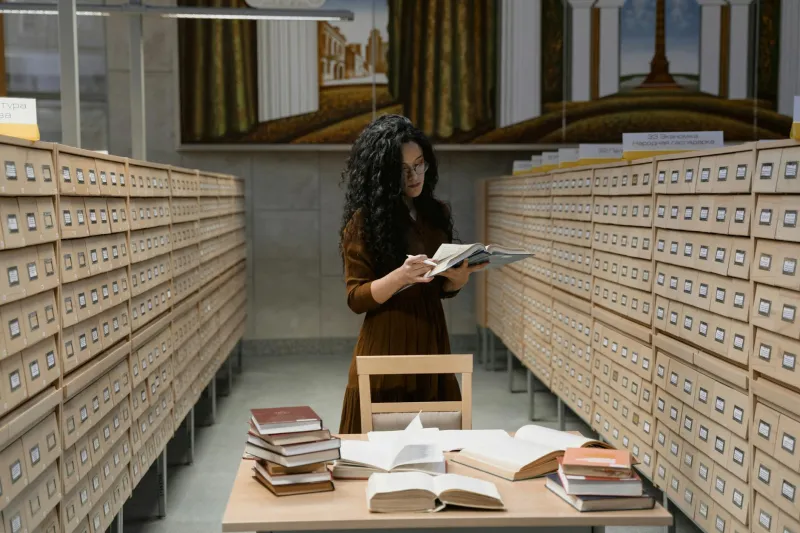
Every Monday morning, millions of Americans check the latest rankings: bestseller lists, streaming charts, social media trending topics. We take these cultural barometers for granted, assuming they've always existed. But the entire concept of systematically tracking popular taste traces back to one curious librarian in Dayton, Ohio, who started counting what people actually wanted to read — and accidentally invented the modern entertainment industry.
The Woman Who Counted Everything
Mary Louise Booth wasn't trying to change how America measured culture when she took over the Dayton Public Library in 1887. She was just trying to solve a practical problem: her library couldn't afford to buy every book, so she needed to figure out which ones people actually wanted.
 Photo: Dayton Public Library, via www.onion.center
 Photo: Mary Louise Booth, via img.freepik.com
Booth's solution was revolutionary in its simplicity. Instead of relying on reviews or publisher recommendations, she started tracking every single book request, creating detailed logs of what patrons asked for, when they asked for it, and how long they waited when copies weren't available. Within months, she had created the first systematic measurement of popular literary taste in American history.
But Booth didn't stop at simple counting. She began analyzing patterns: which books maintained steady demand versus those that spiked and faded, how word-of-mouth recommendations spread through the community, and even how seasonal factors affected reading preferences. By 1890, she was publishing monthly reports that essentially functioned as America's first bestseller lists.
The Data That Publishers Didn't Want to See
Booth's numbers told a story that the literary establishment wasn't ready to hear. The books that educated critics praised weren't always the ones people actually wanted to read. Popular fiction — especially stories written by women — dominated her request logs, while many critically acclaimed works barely registered.
Even more surprising, Booth discovered that public taste was far more sophisticated than publishers assumed. Readers weren't just grabbing whatever was heavily advertised; they were making informed choices based on recommendations from friends, previous experiences with authors, and even seasonal reading moods that followed predictable patterns.
Her data revealed that the publishing industry's assumptions about American reading habits were largely wrong. Publishers were printing books based on what they thought people should read, not what people actually wanted to read. Booth's logs showed a massive disconnect between literary supply and demand.
The Network Effect, Before Anyone Called It That
Perhaps most remarkably, Booth identified what we now call "viral" spread decades before anyone understood the concept. She noticed that certain books would experience sudden surges in requests that couldn't be explained by advertising or reviews. By tracking these patterns, she realized that some books spread through personal recommendations in ways that followed predictable patterns.
She even developed early methods for predicting which books would become popular based on initial request patterns. A book that generated steady, consistent requests over its first few weeks, she found, was more likely to have lasting popularity than one that generated immediate intense interest.
This insight was decades ahead of its time. Booth had essentially discovered the mathematical patterns underlying cultural virality, but she was working in an era when the entertainment industry didn't yet understand that such patterns existed.
The Publishing World Takes Notice
By 1895, Booth's monthly reports were being circulated among publishers, booksellers, and other librarians across the Midwest. Her data-driven approach to understanding reader preferences was beginning to influence purchasing decisions at bookstores and even editorial decisions at publishing houses.
Several publishers began sending representatives to Dayton specifically to study Booth's methods and access her data. They realized that her library was functioning as an early market research laboratory, providing insights into consumer behavior that didn't exist anywhere else.
Booth also began consulting with other libraries, helping them implement similar tracking systems. By 1900, dozens of libraries across the country were using variations of her methods, creating a informal network of cultural data collection that predated any formal market research industry.
The Hollywood Connection Nobody Talks About
Here's where Booth's influence gets really interesting: her methods for tracking popular books directly influenced early Hollywood's approach to selecting stories for adaptation. Several film producers in the 1910s and 1920s used library circulation data — based on Booth's model — to identify which books had the built-in audiences necessary for successful movies.
This connection between library data and entertainment production continued for decades. Many of the books that became classic Hollywood films were selected partly because they had performed well in Booth's tracking systems or similar library-based popularity measurements.
Essentially, Booth had created the first systematic method for identifying intellectual property with proven audience appeal — a concept that now drives billions of dollars in entertainment industry decisions.
Why The New York Times Got the Credit
Despite pioneering the entire concept of popularity rankings, Booth's name is largely forgotten today. When The New York Times launched its famous bestseller list in 1931, the newspaper presented it as an innovation rather than an adaptation of methods that had been used in libraries for decades.
 Photo: The New York Times, via www.dagensps.se
Part of this historical erasure was gender-based: Booth's work was dismissed as "library science" rather than recognized as groundbreaking market research. Part was geographical: cultural innovations from small Midwestern cities rarely received the same attention as those from New York or Los Angeles.
But perhaps most significantly, Booth's work was seen as purely practical rather than theoretical. She was solving immediate problems for her library, not trying to revolutionize how America understood popular culture. The broader implications of her methods only became clear decades later.
The Modern Legacy
Today's entertainment industry runs on data systems that would be immediately recognizable to Mary Louise Booth. Streaming platforms track viewing patterns, social media companies measure engagement, and publishers analyze sales data using methods that are direct descendants of her library logs.
The key insights Booth discovered — that popular taste follows measurable patterns, that word-of-mouth recommendations spread in predictable ways, and that consumer preferences are more sophisticated than industry assumptions — remain foundational to modern entertainment marketing.
Even more remarkably, her understanding of seasonal patterns and demographic variations in cultural consumption predated similar discoveries in market research by decades. Modern data scientists are still working with concepts that Booth identified through careful observation in 1890s Dayton.
The Lesson for Today's Data-Driven World
Booth's story offers a crucial reminder about innovation: sometimes the most important breakthroughs come from people solving practical, everyday problems rather than those trying to revolutionize entire industries. Her systematic approach to understanding what people actually wanted — rather than what experts thought they should want — created insights that continue to shape how we measure and understand popular culture.
In our current era of big data and algorithmic recommendations, Booth's emphasis on understanding human behavior through careful observation rather than assumptions remains surprisingly relevant. She proved that paying attention to what people actually do, rather than what they say they do, reveals truths that can reshape entire industries.
The next time you check a bestseller list or see a "trending" notification, remember Mary Louise Booth, quietly counting book requests in Dayton, Ohio, and accidentally inventing the blueprint for how America measures its own cultural pulse.