NASA's Secret Weapon Against Chaos — And Why Your Calendar App Will Never Match It
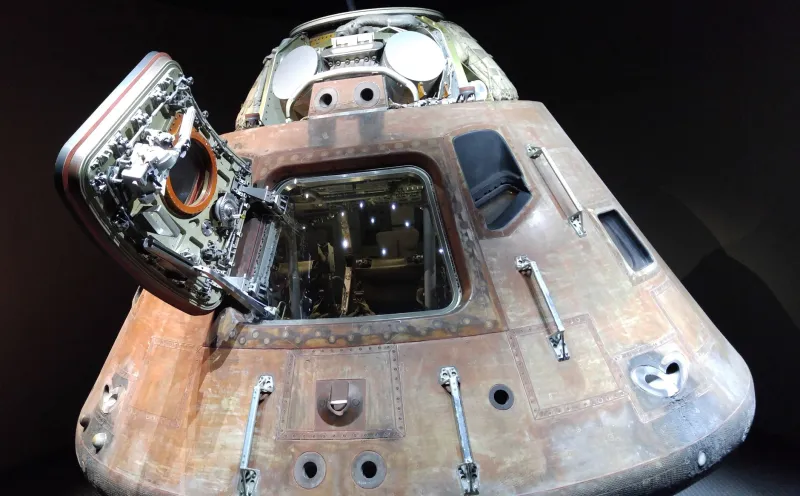
The Day NASA Almost Lost the Moon
July 20, 1969. Apollo 11's lunar module is running low on fuel, Neil Armstrong is manually piloting over a boulder field, and Mission Control is watching their perfectly planned timeline dissolve in real-time. They had exactly 25 seconds of fuel remaining when Armstrong finally touched down.
 Photo: Neil Armstrong, via img42.rajce.idnes.cz
Most people know this story as a triumph of human skill under pressure. What they don't know is that NASA's survival depended on a scheduling philosophy so counterintuitive that modern productivity culture keeps accidentally rediscovering it — and getting it wrong.
The secret wasn't better planning. It was deliberately planning for chaos.
The Anti-Productivity Productivity System
During the Apollo program, NASA engineers developed something they called "schedule margin" — structured empty time built directly into mission timelines. Not buffer time tacked onto the end of tasks, but actual blank periods scheduled as deliberately as any procedure.
Here's how it worked: If a critical system check was estimated to take 30 minutes, NASA would schedule 45 minutes — but the extra 15 minutes wasn't labeled "buffer." It was labeled "margin," and it had its own protocols. If the system check finished early, astronauts didn't rush to the next task. They used the margin time for secondary objectives, equipment familiarization, or rest.
If problems arose, the margin time absorbed them without cascading delays through the entire mission.
This wasn't padding schedules — it was architecting flexibility directly into the timeline structure. The difference is subtle but crucial, and it's why NASA could land on the moon while your morning routine falls apart if the coffee maker takes an extra two minutes.
The Philosophy Hidden in the Archives
NASA's approach flew in the face of traditional project management, which treated schedule efficiency as the highest virtue. While industrial engineers were perfecting assembly lines that eliminated "wasted" time, NASA was deliberately building waste into their most critical missions.
Their reasoning was simple: in complex systems, unexpected events aren't exceptions — they're statistical certainties. Traditional scheduling assumes everything will go according to plan, then scrambles when reality intervenes. Schedule margin assumes reality will intervene, then creates space for it to happen gracefully.
The Apollo 11 fuel crisis? NASA had built margin into their descent timeline. When Armstrong needed extra time to find a safe landing spot, the system absorbed the delay without triggering emergency protocols. The mission succeeded not despite the unexpected, but because it was designed to accommodate the unexpected.
You can find the original NASA scheduling documents in the Johnson Space Center archives, freely available to anyone curious enough to look. Most productivity experts apparently aren't.
 Photo: Johnson Space Center, via images.abandomoviez.net
The Accidental Rediscoveries
Fast-forward to the 1990s. Behavioral researchers studying workplace productivity stumbled onto something they called "implementation intentions" — pre-planned responses to potential obstacles. Their studies showed that people who scheduled specific time for dealing with interruptions were dramatically more successful than those who tried to eliminate interruptions entirely.
The researchers presented this as a breakthrough insight. NASA had been using the same principle for 30 years.
In the 2000s, productivity guru David Allen popularized "time blocking" — scheduling specific activities into calendar slots. His innovation? Recommending that people schedule buffer time between tasks. Productivity blogs hailed this as revolutionary time management.
NASA had been doing it since the Mercury program.
By the 2010s, app developers were creating "smart calendars" that automatically added buffer time to meetings and adjusted schedules when delays occurred. Tech journalists called it "AI-powered productivity."
NASA called it Tuesday.
Why Your Apps Keep Getting It Wrong
The problem with most modern productivity systems is that they're still trying to eliminate chaos rather than accommodate it. Time-blocking apps let you schedule tasks efficiently. Buffer-time features add padding to prevent delays. AI scheduling assistants optimize your calendar for maximum productivity.
But they're all missing NASA's core insight: the goal isn't to prevent the unexpected — it's to create space where the unexpected can happen without destroying everything else.
Consider the difference:
Traditional scheduling: Plan tasks efficiently, add buffer time to prevent delays, optimize for maximum output.
NASA schedule margin: Plan tasks realistically, build structured flexibility into the timeline, optimize for mission success even when things go wrong.
The first approach treats margin time as insurance you hope never to use. The second treats margin time as operational space you plan to use regularly.
The Margin Revolution You Can Actually Use
Here's how NASA's schedule margin translates to civilian life:
Instead of scheduling back-to-back meetings, schedule 45-minute meetings in 60-minute blocks. Use the extra 15 minutes for transition time, note review, or just breathing room. If a meeting runs long, the margin absorbs it. If it ends early, you have space for deeper thinking about what just happened.
Instead of planning your morning to the minute, build margin periods into your routine. Not "buffer time" in case things go wrong, but actual scheduled space for dealing with whatever the day throws at you.
Instead of trying to eliminate interruptions, schedule time specifically for handling interruptions. NASA astronauts knew that unexpected communications from Mission Control were part of the job, so they built space for those communications into their timelines.
The Secret That Was Never Secret
The strangest part of this story? NASA never hid their scheduling philosophy. The Apollo mission reports are public documents. The schedule margin protocols are detailed in freely available technical manuals. The principles behind their approach have been sitting in government archives for half a century, waiting for anyone to notice.
Productivity culture keeps reinventing fragments of NASA's system because we've forgotten that the most successful complex project in human history — landing humans on the moon and bringing them home safely — was built on the radical idea that good planning includes planning for bad planning.
Your smartphone can optimize your schedule, track your habits, and remind you of your priorities. But it can't do what NASA did in 1969: create space for the universe to surprise you without ruining your day.
Maybe it's time to stop trying to eliminate chaos and start scheduling space for it instead.