The Grocery Store Revolutionary Who Shaped Every Kitchen in America — From a Kansas Print Shop
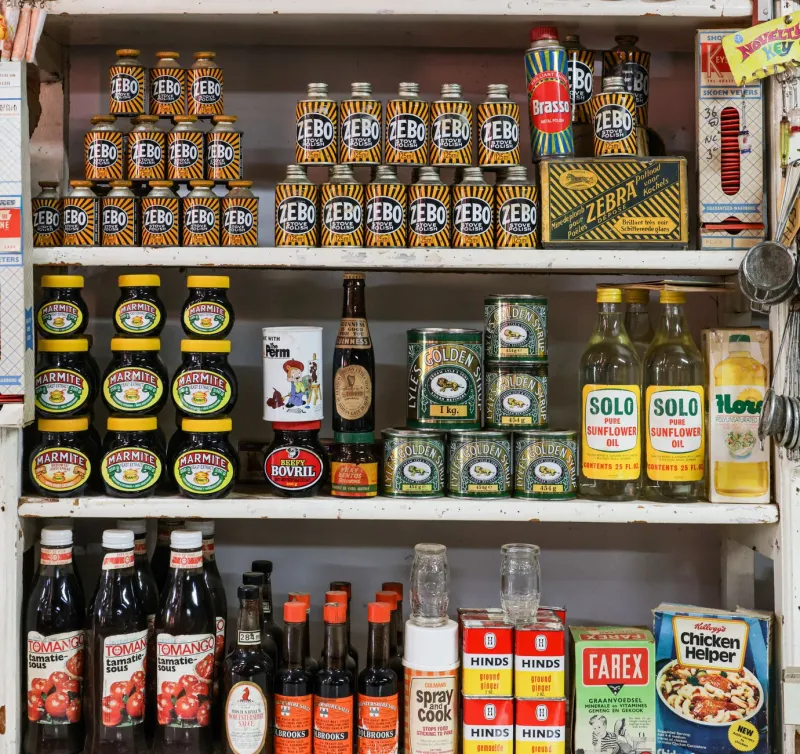
The Man Behind Every Box in Your Pantry
Walk through any American grocery store and you'll see his handiwork on every shelf. Those neat, standardized nutrition labels listing calories, fat content, and ingredients? The format that helps you compare cereals, read soup cans, and avoid allergens? It all started in a small print shop in Topeka, Kansas, in 1963.
 Photo: Topeka, Kansas, via wallpaperaccess.com
The man who designed the template for modern food labeling never worked for the FDA, never lobbied Congress, and never saw a penny from the multi-billion-dollar food industry his innovation transformed. His name was Robert Choate Sr., and his story reveals how one overlooked local business decision quietly shaped what every American reads in their kitchen.
 Photo: Robert Choate Sr., via tradeit.gg
The Printer Who Cared Too Much
Robert Choate wasn't trying to revolutionize food labeling. He was just trying to run an honest business.
Choate owned Topeka Printing & Publishing, a regional shop that handled everything from wedding invitations to small business catalogs. But his side project was what really mattered to him: a small health food store called Nature's Pantry, tucked into the back corner of his print shop.
 Photo: Topeka Printing & Publishing, via photoenrichments.com
This was 1963, when "health food" meant dusty bins of granola and suspicious-looking vitamins sold by true believers to a tiny community of diet enthusiasts. Most Americans bought their food from supermarkets that were just beginning to stock processed, packaged goods with minimal labeling requirements.
Choate's customers were different. They read ingredient lists. They asked questions about additives, preservatives, and nutritional content. And they were frustrated because food manufacturers provided almost no useful information.
The Format That Changed Everything
Federal law in the 1960s required only the most basic labeling: product name, weight, and sometimes a simple ingredient list. No nutritional information, no standardized format, no consumer-friendly presentation. Food companies could — and did — hide information behind tiny print, confusing terminology, and inconsistent layouts.
Choate decided to solve this problem himself.
Using his printing expertise, he began designing voluntary nutrition labels for every product in Nature's Pantry. Not just ingredient lists, but comprehensive breakdowns showing calories per serving, fat content, protein levels, and vitamin information — all presented in a clean, standardized format that customers could easily read and compare.
His design philosophy was revolutionary in its simplicity: put the most important information first, use consistent terminology, make serving sizes meaningful, and present everything in a format that didn't require a chemistry degree to understand.
The labels were an immediate hit with his customers. Word spread through the small but passionate health food community. Other store owners began asking Choate to design similar labels for their products.
From Kansas to Capitol Hill
By the late 1960s, consumer advocacy groups were noticing Choate's work. His standardized nutrition format was exactly what they'd been demanding from food manufacturers — clear, comprehensive, and consumer-friendly.
When consumer advocates began lobbying for federal nutrition labeling requirements in the early 1970s, they didn't start from scratch. They pointed to successful examples already in use. And the most successful, most widely adopted example was the format developed by a printer in Topeka, Kansas.
Robert Choate Jr., the printer's son, became involved in the advocacy effort. (Confusingly, both father and son were named Robert Choate, which has led to some historical mix-ups about who did what.) The younger Choate testified before Congress, presenting his father's labeling format as a practical template for federal requirements.
Congress was impressed. Here was a system that already worked, had been tested in real stores with real customers, and could be implemented without massive industry upheaval.
The Template That Became Law
When the FDA finally mandated standardized nutrition labeling in 1973, the required format looked remarkably similar to what Robert Choate Sr. had been printing in his Kansas shop for a decade. The layout, the terminology, the order of information — it was all there, refined through years of customer feedback and practical use.
The "Nutrition Facts" panel that appeared on food packaging was essentially Choate's design, adapted for federal requirements and mass production. The clear hierarchy of information (serving size first, then calories, then nutrients), the standardized terminology, the consistent visual layout — these were all innovations that had emerged from a small-town printer's desire to help his customers make informed choices.
But when the federal requirements took effect, Robert Choate Sr.'s role in their development was already being forgotten. The official history credited government researchers, consumer advocates, and industry representatives. The Kansas printer who had pioneered the actual format was written out of the story.
The Revolution You Never Noticed
Choate's innovation was so successful that it became invisible. The nutrition label format he developed feels natural, obvious, inevitable — like it must have always existed. It's hard to imagine food packaging without standardized nutrition information, serving size guidelines, and ingredient lists arranged in descending order by weight.
But none of that existed before 1963. Before Choate's work, buying food meant navigating a maze of incomplete information, inconsistent labeling, and manufacturer-friendly terminology designed to obscure rather than inform.
Today, every American reads food labels using a system developed by a man most Americans have never heard of. Every comparison between breakfast cereals, every check for allergen information, every glance at calorie counts relies on the format Robert Choate Sr. designed in his Kansas print shop.
The Local Innovation That Went Global
Choate's story illustrates something fascinating about how change actually happens in America. Major innovations don't always emerge from government agencies, corporate research departments, or academic institutions. Sometimes they come from small business owners solving local problems with whatever tools they have available.
A printer in Kansas noticed that his customers needed better food information. He used his printing skills to create that information. Other people noticed and copied his approach. Eventually, his local solution became a national standard.
No grand plan, no massive funding, no committee meetings. Just one person identifying a problem and creating a practical solution that worked so well it spread organically across the entire country.
The Legacy Living in Your Kitchen
Robert Choate Sr. died in 1987, long before most Americans realized how profoundly his work had shaped their daily lives. His small health food store closed years earlier, and Topeka Printing & Publishing eventually shut down too.
But his innovation lives on in every American kitchen. Every time you check a nutrition label, compare products, or make informed food choices, you're using a system designed by a Kansas printer who just wanted to help his customers eat better.
The next time you're grocery shopping, take a moment to appreciate the clean, standardized information on every package. It seems obvious now, but it took a small-town revolutionary with a printing press to make it happen.
History forgot his name, but it kept his idea. Sometimes, that's the most lasting kind of legacy.