When America's Basements Were Underground Mushroom Empires — Before Anyone Called It 'Foraging'
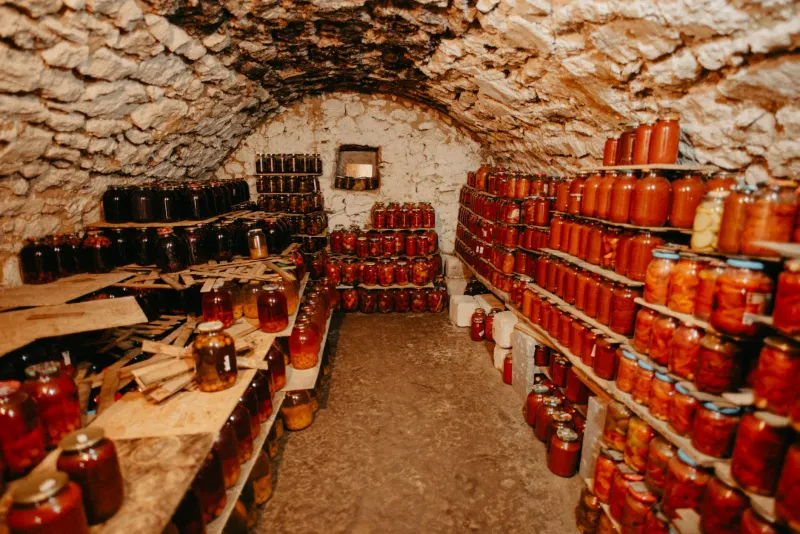
When America's Basements Were Underground Mushroom Empires — Before Anyone Called It 'Foraging'
Walk into any upscale grocery store today, and you'll find exotic mushrooms commanding premium prices — shiitake, oyster, maitake — marketed as sophisticated ingredients for adventurous home cooks. But here's what the fancy food labels won't tell you: your great-great-grandmother was probably growing these same "exotic" varieties in her basement back in 1890.
The Secret Mushroom Revolution Nobody Remembers
Between 1870 and 1920, a quiet agricultural revolution was happening in American cellars, root cellars, and converted barns across the country. Thousands of households — particularly in Pennsylvania, Ohio, and upstate New York — were cultivating mushrooms with a sophistication that would impress today's urban foragers.
This wasn't just about the common white button mushrooms we know today. Victorian-era Americans were growing oyster mushrooms on logs, cultivating shiitake varieties on hardwood, and even experimenting with what we now call "wine cap" mushrooms in their gardens. Agricultural journals from the 1880s contain detailed instructions for building mushroom houses, managing temperature and humidity, and harvesting cycles that sound remarkably similar to modern mycology guides.
The scale was impressive. An 1891 survey by the Pennsylvania Department of Agriculture found that over 3,000 households in just three counties were actively growing mushrooms for both personal consumption and local sale. These weren't gentleman farmers with hobby gardens — these were working families who had figured out that mushrooms could provide protein-rich food year-round with minimal space and investment.
 Photo: Pennsylvania Department of Agriculture, via cdni.hotnudes.com
Why Victorian Americans Became Mushroom Masters
The driving force behind this mushroom boom wasn't culinary adventure — it was economic necessity mixed with immigrant knowledge. Many of the families leading this movement were recent immigrants from regions where mushroom cultivation was traditional: German, Italian, and Eastern European families who brought centuries-old techniques to American soil.
But there was also a uniquely American innovation happening. Unlike their European ancestors who often foraged wild mushrooms seasonally, these American cultivators were creating controlled growing environments that could produce food year-round. They were essentially inventing urban agriculture decades before anyone used that term.
The economics made sense too. A family could convert a small basement space into a mushroom operation for less than $50 (about $1,500 today), and within a few months, they'd be harvesting several pounds of fresh mushrooms weekly. In an era when fresh vegetables were scarce in winter, this was revolutionary.
The Techniques That Time Forgot
The methods these early American mushroom growers used were surprisingly sophisticated. They understood that different mushroom varieties needed different substrates — they'd grow oyster mushrooms on wheat straw, shiitake on oak logs, and what they called "field mushrooms" on composted horse manure.
They also developed temperature and humidity control systems that were ingenious for their time. Basement mushroom houses often featured multiple chambers with different microclimates, allowing families to grow several varieties simultaneously. Some even built primitive air circulation systems using coal-powered fans.
Perhaps most impressively, they developed preservation techniques that kept mushrooms edible for months. Before refrigeration was common, these families were drying, pickling, and even smoking mushrooms using methods that modern food scientists are just beginning to understand and appreciate.
The Great Disappearance
So what happened to this thriving mushroom culture? The answer is a combination of industrialization, urbanization, and changing food systems that swept away many traditional food practices in the early 20th century.
As cities grew and families moved away from homes with suitable basement spaces, mushroom cultivation became less practical. The rise of commercial agriculture meant that store-bought vegetables became cheaper and more convenient than home-grown alternatives. And perhaps most significantly, the two World Wars disrupted the immigrant communities that had been the keepers of mushroom-growing knowledge.
By 1950, this once-thriving tradition had virtually disappeared. The knowledge lived on in scattered agricultural extension bulletins and the memories of elderly farmers, but the widespread practice was gone.
The Modern Rediscovery
Today's mycologists and food historians are just beginning to piece together the scope of America's forgotten mushroom culture. Dr. Sarah Chen, a mycologist at Cornell University, has been studying historical agricultural records and has found evidence of mushroom cultivation practices that were far more advanced than previously recognized.
 Photo: Dr. Sarah Chen, via www.slideteam.net
 Photo: Cornell University, via i.pinimg.com
"These Victorian-era growers were doing things we're only now understanding scientifically," Chen explains. "They had figured out companion planting with mushrooms, sustainable substrate recycling, and even some primitive forms of mushroom breeding."
Some of the varieties they grew have completely disappeared from American cultivation. Historical seed catalogs list mushroom varieties with names like "Pennsylvania Giant" and "Ohio Winter" that no modern grower has seen. These weren't just different names for common varieties — they appear to have been distinct cultivars adapted to specific regional conditions.
Why This Matters Today
As modern Americans grapple with food security, sustainable agriculture, and the desire to reconnect with traditional food practices, this lost mushroom culture offers genuine lessons. The techniques developed by 19th-century American mushroom growers could be particularly relevant for urban agriculture, small-space food production, and reducing dependence on industrial food systems.
Several modern homesteaders and urban farmers are already experimenting with updated versions of these historical techniques. The basic principles — using controlled environments, understanding substrate relationships, and growing food in small spaces year-round — are as relevant today as they were 130 years ago.
More importantly, this forgotten chapter of American food history reminds us that what we think of as "new" trends in sustainable eating often have deep roots in practices our ancestors took for granted. Before mushrooms became a trendy superfood, they were simply smart, practical nutrition that thousands of American families grew in their basements.
The next time you pay $8 for a small container of "exotic" mushrooms at the grocery store, remember: your great-great-grandmother probably grew better ones in her cellar for pennies.