The Little Wooden Buildings That Kept America Fed All Winter — And the Obsessives Rebuilding Them
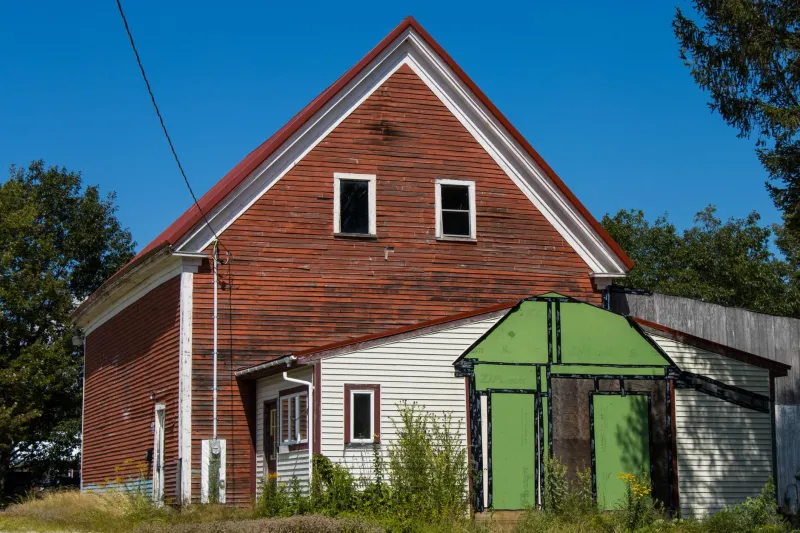
Somewhere between the barn and the root cellar, almost every American farmstead once had a small, dark, slightly mysterious outbuilding that doesn't show up in the romantic paintings of rural life. It wasn't pretty. It smelled intensely of hickory or apple or sassafras depending on where you lived. Its walls were permanently stained the color of old bourbon. And it was, for most of American history, one of the most important structures on the property.
The smokehouse.
Not a smoker. Not a pellet grill. Not the kettle on your back patio with the wireless thermometer. A dedicated, permanent building — sometimes brick, sometimes timber, sometimes clay-chinked log — designed to do one thing over the course of weeks and months: transform raw meat into something that could last through a hard winter without refrigeration.
We lost these buildings in about twenty years. And now, quietly, people are building them back.
A Building With a Different Job Than You Think
Most people picture a smokehouse and imagine something like a large grill. The reality was more like a slow, controlled environment — part dehydrator, part antimicrobial chamber, part flavor laboratory.
The goal wasn't to cook the meat. It was to cure it. Hams would hang for weeks, sometimes months, in a cool smoke that hovered between 70 and 90 degrees Fahrenheit — far below cooking temperature. The smoke itself carried phenolic compounds that inhibited bacterial growth. Combined with salt rubs applied days or weeks before the meat ever entered the building, the process created preserved foods that could hang in that same smokehouse through summer and into the following year.
Virginia's Smithfield hams — still celebrated today — are a direct descendant of this tradition. The original Smithfield cure required peanut-fed hogs and a minimum of six months of aging, much of it in a smokehouse. The flavor those conditions produced is chemically distinct from anything a modern processing facility generates. People who've tasted genuine long-cured Smithfield ham and a supermarket spiral-cut describe them as essentially different foods.
Regional Variety Nobody Talks About
One of the most surprising things about American smokehouse culture is how dramatically it varied by region — and how little of that regional knowledge survived the transition to refrigeration.
In the Appalachian South, hickory was king. The dense, slow-burning smoke from hickory wood produced a bold, almost aggressive flavor profile that paired with the region's preference for heavily salted, long-cured hams. Some families had smokehouse traditions that specified particular trees from particular hollows on their property, believing the soil affected the wood's flavor.
In the German-settled communities of Pennsylvania and the Midwest, fruitwoods — apple, cherry, pear — were the preferred fuel. The smoke ran cooler and sweeter, producing a subtler cure. Pennsylvania Dutch sausages and smoked cheeses from this tradition had a delicacy that's almost impossible to replicate today.
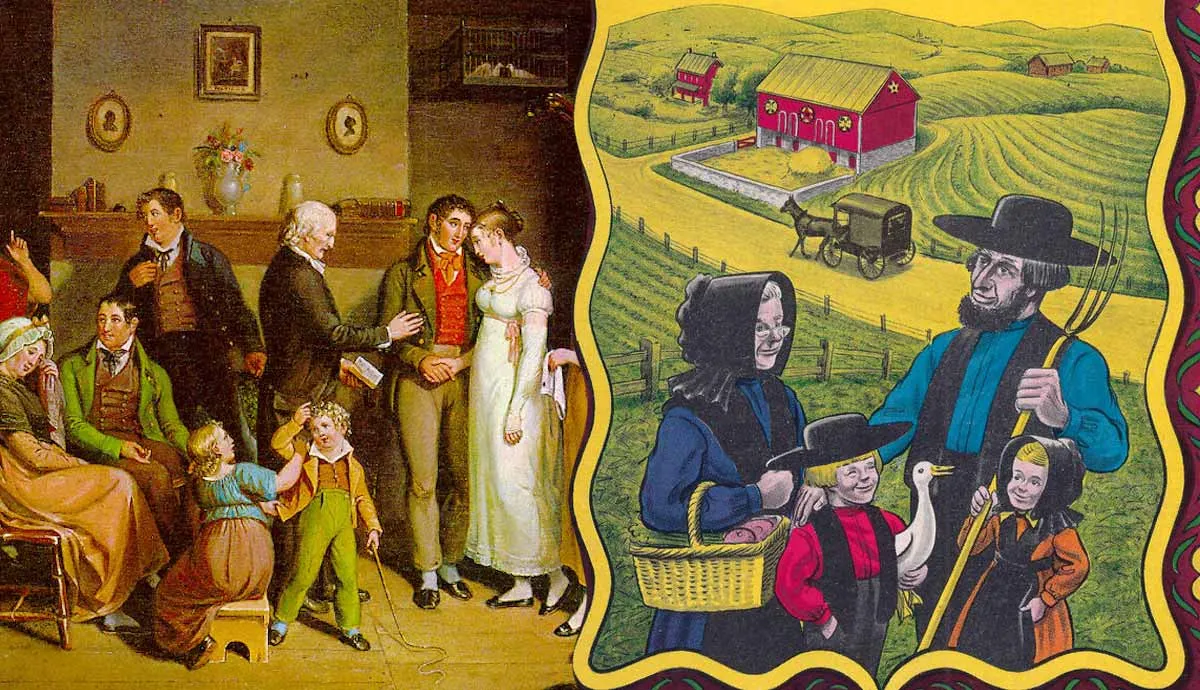 Photo: Pennsylvania Dutch, via cdn.thecollector.com
In coastal New England, the tradition leaned heavily on fish — cod, mackerel, and herring smoked over alder and maple. These weren't smokehouses in the Southern sense but specialized fish houses, and the smoked fish they produced was a major export commodity in the 18th and 19th centuries.
Texas developed its own distinct tradition, influenced by German and Czech immigrant butchers who set up meat markets in the Hill Country. The emphasis was on beef — brisket and sausage — smoked in post oak. That tradition didn't die; it evolved into what we now call Texas barbecue. But the original context was preservation, not weekend cookouts.
 Photo: Texas Hill Country, via www.mickeyshannon.com
What Refrigeration Erased
When electric refrigeration became widely available to rural American households in the 1940s and 1950s, the smokehouse didn't gradually fade. It essentially vanished within a generation. The practical need disappeared almost overnight, and with it went the accumulated knowledge of how to build, maintain, and use these structures effectively.
What also vanished — and this is the part that drives the revival community slightly crazy — was the flavor. Slow, cold smoking over weeks produces chemical changes in meat that quick hot-smoking simply doesn't replicate. Compounds called carbonyls and aldehydes penetrate deep into the tissue during long cures. Proteins break down in ways that create umami complexity. The fat oxidizes slowly, developing what old-timers called "the cure taste" — something between nuttiness and depth that food scientists have studied but struggled to shortcut.
You can get close with a modern smoker. You cannot get there.
The People Rebuilding From Old Blueprints
Across rural Virginia, Tennessee, Kentucky, and increasingly in unexpected places like upstate New York and the Pacific Northwest, a small community of enthusiasts is rebuilding smokehouses from scratch. They're not doing it for Instagram — though some of them certainly have accounts. They're doing it because they got a taste of something, literally or figuratively, and couldn't let it go.
Many of them are working from agricultural extension bulletins from the 1930s and 1940s — documents the USDA produced to help farm families build and use smokehouses properly. Others have tracked down original structures on old family land and reverse-engineered the dimensions and construction methods. Online forums dedicated to the practice have grown steadily over the last decade, with members sharing curing salt ratios, wood sourcing strategies, and temperature logs with the same intensity that homebrewers share yeast strains.
Some are going further. Heritage breed pork producers in the Southeast are partnering with smokehouse revivalists to recreate pre-industrial cured meat traditions end to end — from the specific pig genetics to the specific wood smoke to the specific aging time. The results, by all accounts, are extraordinary.
Why It Matters Beyond the Flavor
There's something larger happening in the smokehouse revival than nostalgia for old ham. It's part of a broader rediscovery that some of the food preservation knowledge accumulated over centuries of American rural life was genuinely sophisticated — not primitive — and that we discarded it faster than we understood it.
Refrigeration is a miracle. Nobody's arguing otherwise. But the smokehouse produced things refrigeration cannot, and recognizing that distinction is the first step toward not losing the knowledge entirely.
The people rebuilding these little dark buildings from century-old blueprints aren't rejecting modernity. They're recovering something that modernity, in its rush forward, accidentally left behind.