Four Billion Trees Vanished in a Generation — And Almost Nobody Noticed
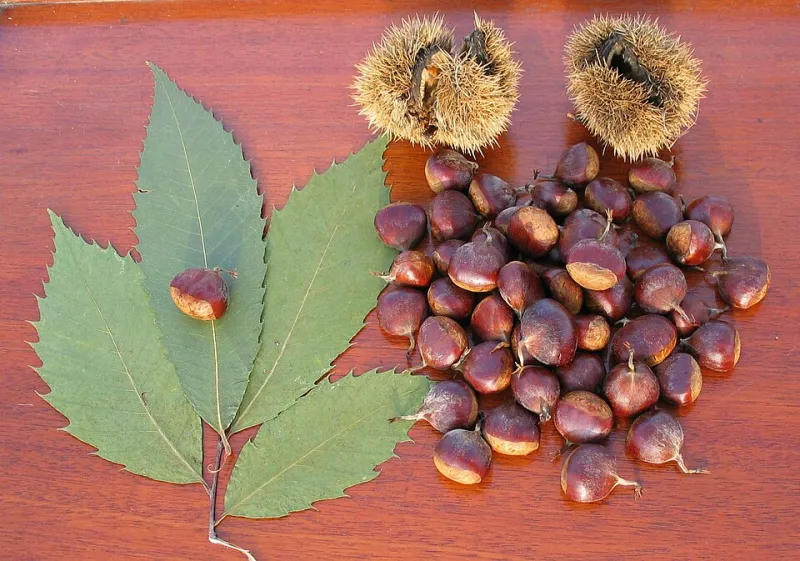
Photo: The original uploader was Peatcher at German Wikipedia., CC BY-SA 3.0, via Wikimedia Commons
Imagine waking up tomorrow and every oak tree east of the Mississippi was dead. Every single one. Gone from the ridgelines, the schoolyard corners, the old farm fences. That's roughly the scale of what happened to the American chestnut — except almost nobody outside of Appalachia talks about it.
At its peak, Castanea dentata made up somewhere between a quarter and a third of all hardwood trees in the Eastern United States. Four billion trees. They ran from Maine to Georgia, up into the Ohio River Valley, dense across the Blue Ridge and the Smokies. Old-timers described autumn hillsides that literally glittered white with chestnut blossoms. The nuts fell so thick on the forest floor that pigs were fattened on them without a single bag of feed.
The Tree That Built a World
This wasn't just a food tree. It was an entire economy in bark and wood.
Appalachian families built their homes from chestnut lumber, fenced their fields with chestnut rails, tanned their leather with chestnut bark, and fed their livestock on chestnut mast every fall. The wood was light, rot-resistant, and straight-grained — better than oak for fence posts, better than pine for furniture. Railroad companies used it for ties. Telegraph companies stripped whole hillsides for poles.
For families living in the rural South and mid-Atlantic, the annual chestnut harvest wasn't quaint or nostalgic — it was a financial lifeline. Street vendors in New York and Philadelphia roasted them on iron grates through the winter. The nuts were cheap, calorie-dense, and available to anyone with a burlap sack and a free afternoon. They were, in the most literal sense, a commons — a shared wild resource that bridged the gap between poverty and hunger for millions of Americans.
Then, in 1904, a forester at the Bronx Zoo noticed something strange on a few chestnut trees. The bark was cracking. Orange-yellow lesions were spreading in rings around the trunks. Within a few years, the same pattern was showing up across New York state. By 1950, it was essentially over.
 Photo: Bronx Zoo, via c8.alamy.com
The Fungus Nobody Saw Coming
The culprit was Cryphonectria parasitica, a fungal pathogen that had arrived on imported Asian chestnut trees — which had evolved alongside it and developed natural resistance. The American chestnut had no such immunity. The fungus didn't kill the roots; it girdled the trunks, cutting off the flow of nutrients until the tree above the blight line died. Four billion trees, dead or dying, in roughly fifty years.
What makes the story stranger is how little public alarm accompanied it. There were no newspaper front pages mourning the chestnut. No national days of remembrance. The trees just... stopped being there. A generation grew up in forests that their grandparents would have found unrecognizable, and most of them never knew what they were missing.
The stumps, though — the stumps kept sending up shoots. Even today, if you walk the right Appalachian hollows, you'll find chestnut sprouts rising from century-old root systems, green and hopeful, before the blight finds them again and kills the stem back to the ground. The roots are still alive. The tree is still trying.
The Scientists Trying to Rewrite the Ending
Here's where the story gets genuinely strange — and genuinely hopeful.
A nonprofit called the American Chestnut Foundation has been working since the 1980s on a backcross breeding program, crossing American chestnuts with blight-resistant Chinese chestnuts, then crossing the offspring back to American trees repeatedly over generations. The goal is a tree that's 94 percent American chestnut in genetics but carries the blight resistance of its Asian cousin. It's painstaking, decades-long work, but they've made real progress. Orchards of candidate trees are being tested across the original range right now.
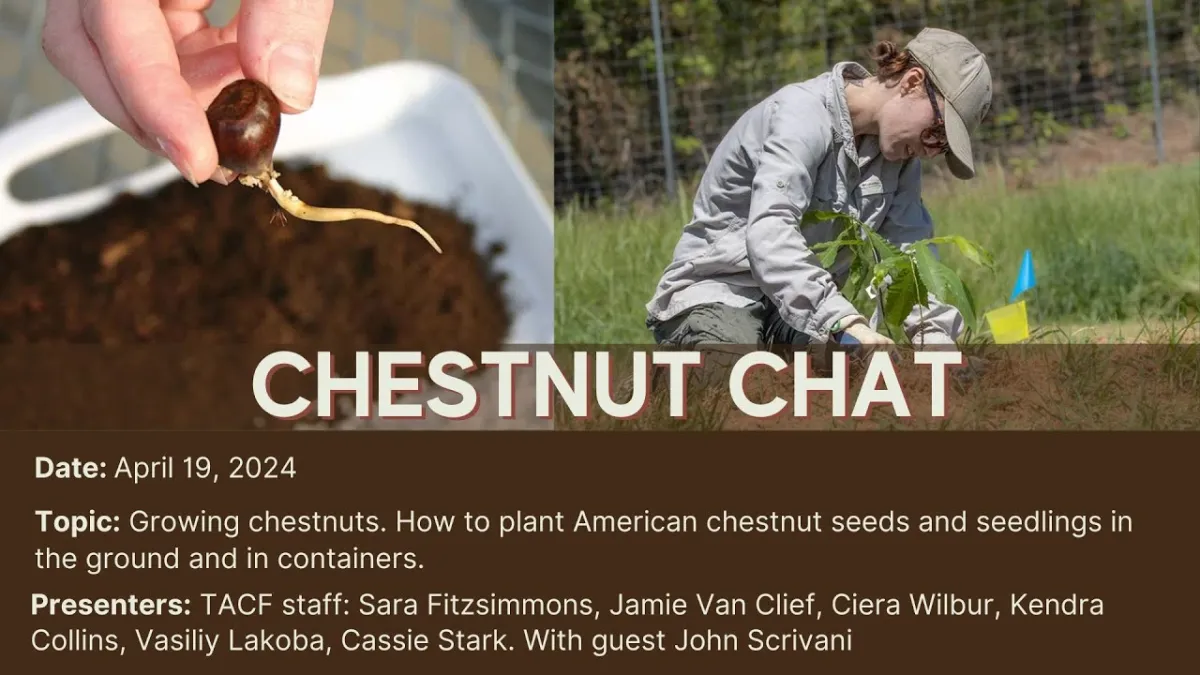 Photo: American Chestnut Foundation, via i.ytimg.com
A separate team at the State University of New York has taken an even more audacious approach: genetic engineering. They've inserted a single gene from wheat — one that produces an enzyme that neutralizes the fungal toxin — into American chestnut embryos. The resulting trees, called Darling 58, have shown strong blight resistance in field trials. The researchers submitted a petition for regulatory approval, which would make it the first genetically engineered forest tree approved for release into the wild in the US. That decision is still working its way through federal agencies.
Both approaches are controversial in different ways. The backcross trees take generations. The GMO trees raise ecological questions that reasonable scientists still debate. But the fact that either approach exists at all — that serious people are spending serious careers on this — says something about how much was actually lost.
Why This Matters Right Now
The American chestnut story is often framed as an environmental tragedy, which it is. But it's also a story about cultural amnesia — about how quickly a civilization can forget what it depended on.
Talk to anyone over eighty from rural western North Carolina or eastern Tennessee and they'll still remember their grandparents talking about chestnut season the way people talk about Christmas. The recipes, the harvest rituals, the specific weight of a full burlap sack — that knowledge is almost entirely gone now, held by fewer people every year.
If the restoration efforts succeed — and some researchers genuinely believe they will within decades — there will be a tree ready to come back to forests that have been waiting for it. Whether the culture that grew up around it can be recovered is a different question entirely.
Some things, once lost, can be replanted. Others can only be remembered.