The Underground Empire That Fed America's Elite — Until One Bad Season Killed It All
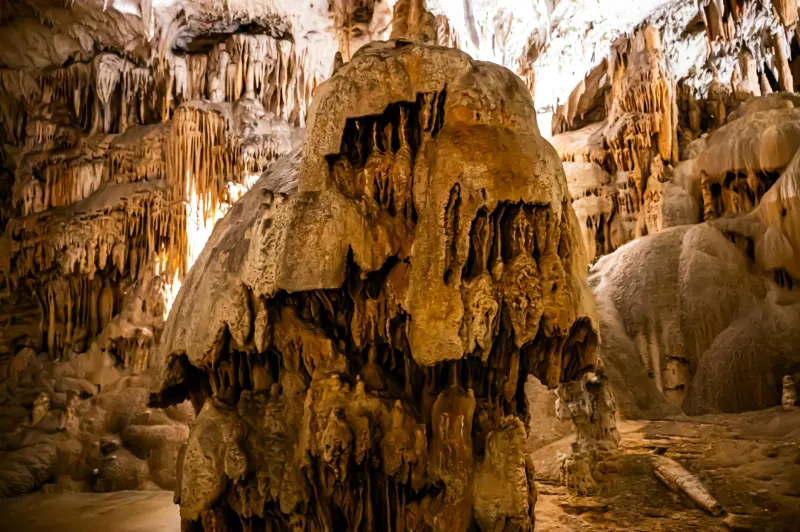
The Secret Kingdom Beneath Pennsylvania
In the 1880s, if you ordered mushrooms at Delmonico's in New York or the Palmer House in Chicago, there was a good chance they came from a place most diners had never heard of: the underground limestone caverns of Chester County, Pennsylvania.
Long before Kennett Square earned its title as "Mushroom Capital of the World," a smaller community called Avondale had quietly built America's first industrial mushroom operation. What started as a curious experiment by French immigrants became a subterranean empire that supplied the nation's finest restaurants — until it all came crashing down in a single, devastating season.
The Accidental Discovery
The story begins with abandoned quarries. Chester County's limestone had been mined extensively in the mid-1800s, leaving behind a network of cool, humid caves that seemed perfect for nothing. Local farmers occasionally used them for cold storage, but mostly they sat empty.
Then came the French connection. In 1876, a group of immigrants from the mushroom-growing regions of France noticed something familiar about these Pennsylvania caves. The temperature stayed constant around 55 degrees year-round. The humidity was perfect. The limestone walls seemed to breathe in a way that reminded them of the caves back home where they'd grown champignons for generations.
What happened next was pure entrepreneurial magic. Within five years, Avondale's underground network was producing thousands of pounds of mushrooms monthly. The operation was so secretive that most locals didn't even know it existed — they just knew that certain families had suddenly gotten very wealthy, very quietly.
The Underground Economy
By 1885, the Avondale mushroom caves employed nearly 200 people in a town of just 800. Workers would descend into the limestone tunnels each morning carrying oil lamps and emerge hours later with baskets of perfect white mushrooms.
The operation was remarkably sophisticated. The French immigrants had developed a complex composting system using horse manure from Philadelphia's streetcar operations, mixed with specific ratios of straw and organic matter. They'd carved out specialized growing chambers at different depths to control temperature and airflow. Some tunnels stretched nearly a mile underground.
Restaurants in New York, Philadelphia, and Washington became dependent on Avondale's supply. The mushrooms were packed in ice and shipped by rail, arriving at urban markets within 24 hours of harvest. For nearly a decade, this single Pennsylvania community controlled a significant portion of America's gourmet mushroom trade.
The Night Everything Died
The end came swiftly in the spring of 1893. A fungal blight, later identified as a strain of Trichoderma, swept through the cave system. Within three weeks, every growing chamber was contaminated. The carefully cultivated mushroom beds turned green with mold. The smell was reportedly so overwhelming that workers couldn't enter the tunnels.
The French families tried everything. They sealed off infected sections, started fresh with new compost, even brought in specialists from France. Nothing worked. The blight had infiltrated the limestone itself, creating an environment where mushrooms simply couldn't grow.
By summer's end, the entire operation was abandoned. Families packed up and moved away. The caves were sealed. Within a year, Avondale had returned to being just another small Pennsylvania town, its brief moment as America's mushroom capital already fading from memory.
The Phoenix from the Fungi
But the story doesn't end with failure. The collapse of Avondale created an unexpected opportunity just 15 miles away in Kennett Square. Some of the French families relocated there, bringing their expertise to a community that had been watching Avondale's success with interest.
Kennett Square learned from Avondale's mistakes. Instead of relying on natural caves, they built controlled growing houses above ground. They developed more resilient growing methods and diversified their mushroom varieties. When the Pennsylvania Railroad established a direct line to New York in 1896, Kennett Square was perfectly positioned to become the new mushroom capital.
Today, Chester County still produces about 65% of America's mushrooms, generating over $400 million annually. The industry employs thousands of workers and supplies mushrooms to restaurants and grocery stores nationwide. But it all traces back to those experimental caves in Avondale and the hard-learned lesson that putting all your fungi in one underground basket can be a recipe for disaster.
The Lessons Underground
The Avondale story reveals something fascinating about American entrepreneurship and agricultural innovation. Sometimes our biggest successes grow from spectacular failures. The mushroom industry that emerged from Avondale's collapse was more resilient, more diversified, and ultimately more successful than the original.
It also shows how immigrant knowledge and traditional techniques often seeded America's most unlikely industries. Without those French families and their generations of mushroom-growing expertise, Pennsylvania might never have become the fungi capital of America.
The next time you add mushrooms to your pizza or salad, remember: there's a good chance they came from Chester County, Pennsylvania, where an underground empire once thrived in limestone caves — and where its spectacular collapse helped create the modern American mushroom industry.