The Canal That Almost Made Ohio the New York of the West — Then Vanished Into Legend
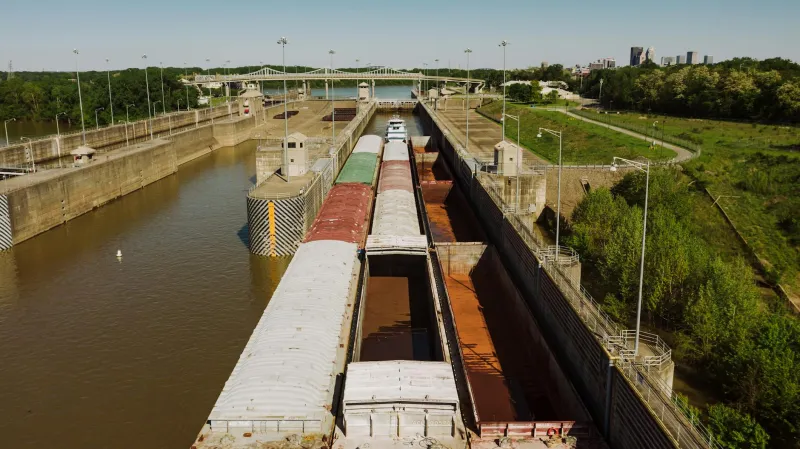
In 1825, the same year the Erie Canal opened and made New York City the undisputed commercial capital of America, a group of ambitious Ohioans looked at their state's geography and saw opportunity. They were going to build something bigger, better, and more profitable than anything the East Coast had ever imagined.
The Ohio and Erie Canal would stretch 308 miles from Lake Erie to the Ohio River, creating a continuous water highway from the Great Lakes to the Gulf of Mexico. Towns like Akron, Massillon, and Newark weren't just going to compete with New York — they were going to replace it.
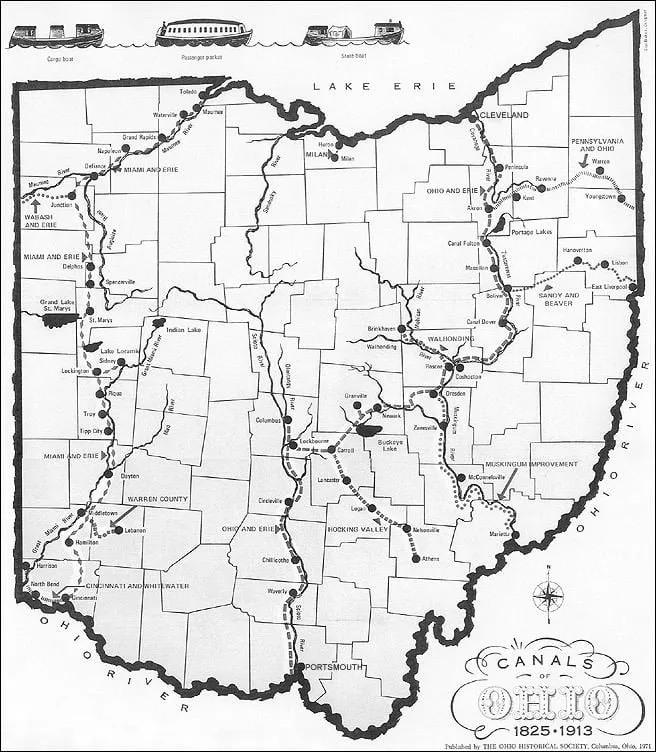 Photo: Ohio and Erie Canal, via alchetron.com
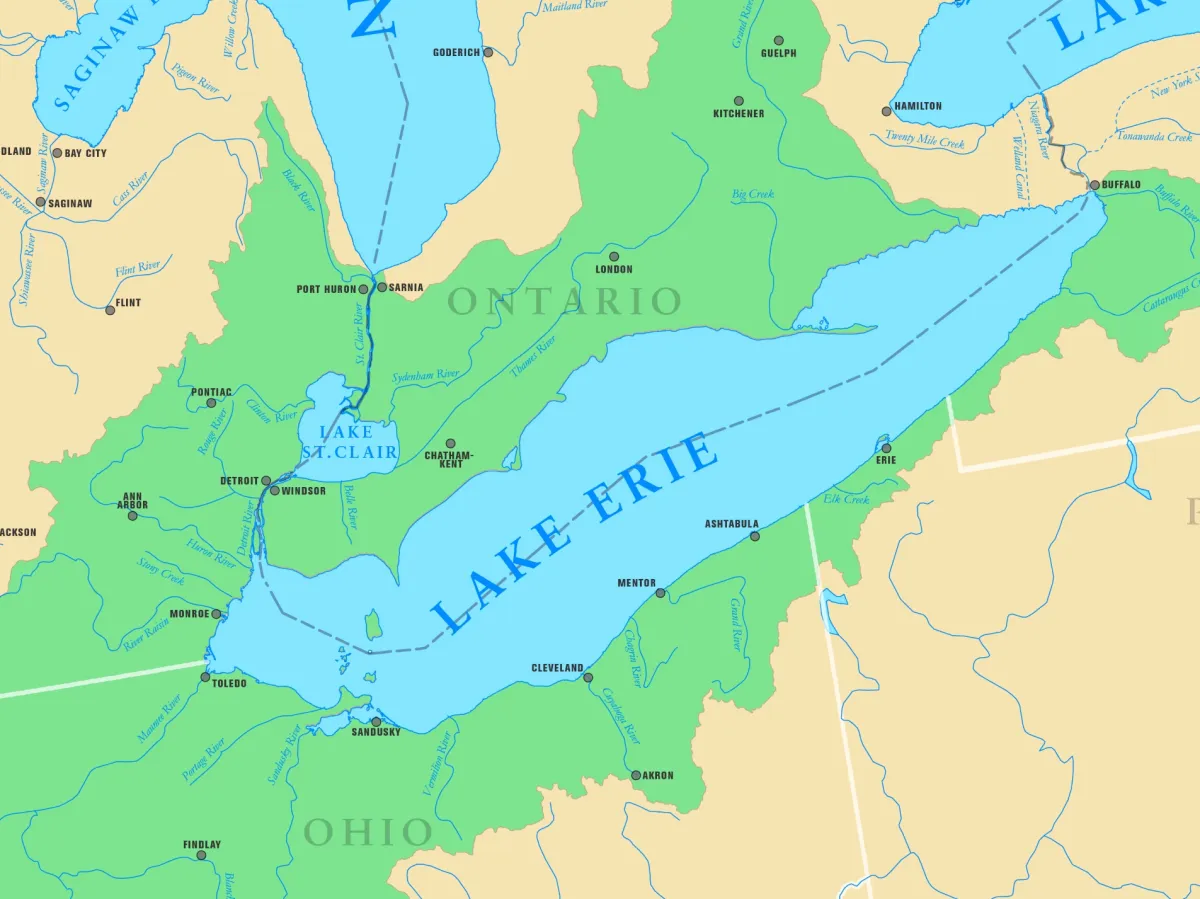 Photo: Lake Erie, via ontheworldmap.com
For a brief, shining moment, it almost worked.
The Vision That Could Have Changed Everything
The plan was audacious in its scope. Unlike the Erie Canal, which connected existing major cities, Ohio's canal system would create prosperity from scratch. Small farming communities would transform into bustling ports. Goods would flow seamlessly from Minnesota wheat fields to New Orleans markets, all through the heart of Ohio.
By 1832, the first section was complete, and the results were immediate and dramatic. Akron's population exploded from 500 to 3,500 in just five years. Property values along the canal route increased by 400%. Small towns like Roscoe and Canal Fulton became overnight boom towns as merchants and manufacturers rushed to claim waterfront real estate.
"It was like watching cities grow in fast-forward," wrote canal engineer David Bates in his diary. "Every month brought new warehouses, new hotels, new fortunes being made."
The Fatal Flaw Nobody Saw Coming
But Ohio's canal builders made a crucial miscalculation. They assumed that water transportation would remain the cheapest way to move goods forever.
They were wrong.
Even as the canal was being completed in the 1840s, railroad technology was advancing rapidly. By 1850, trains could move freight faster and more reliably than canal boats, without worrying about winter freezes or summer droughts.
Worse, railroads could go anywhere. Canals were stuck following the path of least resistance through valleys and along rivers. When businesses wanted to expand into new territories, they chose rail over water every time.
The Towns Time Forgot
The collapse of the canal economy left a strange legacy: dozens of communities that were built for a future that never came.
Today, you can still find the remnants scattered across Ohio. Zoar, once a thriving canal port, is now a village of 169 people surrounded by the crumbling foundations of warehouses that were supposed to rival those in Buffalo.
Canal Winchester, despite its name, never actually connected to the main canal system — the project ran out of money just miles short of the town. The unfinished locks and empty canal bed still cut through the center of town like a scar from an abandoned dream.
Most haunting of all is Lock 60 near Akron, where you can still see the massive stone walls that once lifted canal boats 10 feet higher on their journey north. Local historians estimate that more cargo passed through this single lock in 1845 than through some major ports today.
The Infrastructure That Refused to Die
What's remarkable is how much of the canal system survived, hidden in plain sight.
The Cuyahoga Valley National Park preserves 20 miles of the original canal, complete with working locks and period canal boats that give visitors a glimpse of what Ohio's water highway once looked like.
In downtown Akron, Main Street follows the exact path of the old canal. The wide boulevard that seems oversized for the current city was designed to accommodate the constant traffic of mule-drawn canal boats.
Even more surprising, parts of the canal are still in use. The Akron Water Works draws millions of gallons daily from the old canal reservoirs, and several sections have been converted into recreational waterways for kayaking and fishing.
The Road Not Taken
Historians love to play "what if" games, but the Ohio canal system offers a particularly tantalizing alternative history.
If railroads had developed more slowly, or if canal technology had advanced faster, Ohio might have become the transportation hub of America. Cleveland could have rivaled New York as a port city. Akron might have grown into a major metropolis instead of remaining a mid-sized industrial town.
"The canal represented a completely different model of American development," explains Dr. Sarah Mitchell, who studies transportation history at Ohio State. "Instead of a few dominant coastal cities, we might have had a more distributed network of inland ports and manufacturing centers."
Lessons From the Water
The Ohio canal story offers a sobering reminder about the unpredictability of technological change. The same visionaries who correctly identified Ohio's geographic advantages completely missed the railroad revolution happening under their noses.
Today, as we debate high-speed rail, electric vehicles, and hyperloop technology, it's worth remembering that even the most carefully planned infrastructure can become obsolete faster than anyone expects.
But the canal also demonstrates the staying power of good ideas. The water routes that seemed hopelessly outdated in 1860 are now prized recreational assets. The towns that were "left behind" by progress have become charming destinations for visitors seeking authentic American history.
Sometimes what looks like failure is just a detour on the way to a different kind of success.