America's Hidden Underground Cheese Empire That Vanished When the Refrigerator Arrived
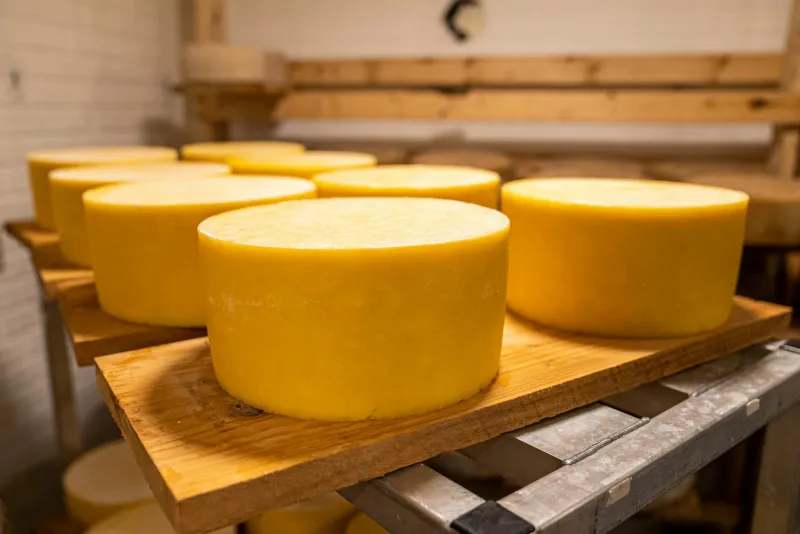
The Secret World Beneath Your Feet
While food bloggers debate the merits of artisanal this and small-batch that, they're missing the biggest story in American cheese history. Long before "farm-to-table" entered our vocabulary, an entire underground industry was perfecting techniques that would make today's craft cheese makers weep with envy.
Scattered across Missouri, Kentucky, Indiana, and Wisconsin, natural limestone caves maintained the perfect conditions for aging cheese: steady 55-degree temperatures, consistent humidity, and natural air circulation that no modern facility could replicate. These weren't rustic operations run by hobby farmers — they were sophisticated businesses that supplied cheese to major cities across the Midwest and beyond.
The Cave Advantage Nobody Talks About
Limestone caves offered something that modern cheese makers spend millions trying to recreate: perfectly stable microclimates. The porous rock naturally filtered air while maintaining humidity levels between 80-95%, creating an environment where beneficial molds thrived and harmful bacteria couldn't survive.
In Missouri's Meramec River valley, cave-aged cheddar developed flavor profiles that took Swiss and English competitors years to achieve. Kentucky's Mammoth Cave region produced a sharp, crystalline cheese that New York restaurants specifically requested by name. Indiana's cave operations developed aging techniques for fresh cheeses that extended shelf life without sacrificing taste — a breakthrough that industrial food companies would later spend decades trying to reverse-engineer.
The caves weren't just storage spaces. They were living ecosystems where each chamber developed its own unique bacterial cultures, creating signature flavors that couldn't be reproduced anywhere else. Cheese makers would move wheels between different cave sections, orchestrating flavor development like conductors leading an orchestra.
When Progress Killed Perfection
The death blow came not from competition or changing tastes, but from technology that seemed like pure progress. When reliable mechanical refrigeration became affordable in the 1920s and 1930s, the economics shifted overnight.
Sudenly, cheese could be aged anywhere with electricity. Factory operations could scale production beyond what cave systems could handle. Insurance companies began viewing cave operations as risky ventures. Health inspectors, armed with new industrial standards, found fault with facilities that had operated safely for generations.
By 1950, most cave aging operations had either closed or moved to modern facilities. The knowledge accumulated over decades — which caves produced the best flavors, how to manage airflow between chambers, which bacterial cultures thrived in specific rock formations — vanished with the craftsmen who held it.
The Underground Revival Nobody's Covering
Here's what the food media is missing: cave aging is quietly making a comeback, and it's happening in places you'd never expect.
In southern Indiana, a former limestone quarry now houses one of the country's most sophisticated cheese aging operations. The facility uses the same principles as historical cave operations but with modern safety protocols and quality control. Their aged cheddars regularly outperform European imports in blind tastings, yet most cheese enthusiasts have never heard of them.
Missouri's Crown Valley Winery stumbled into cheese making when they realized their wine caves created perfect conditions for aging cheese. Their cave-aged gouda develops flavor complexity that would take conventional aging facilities twice as long to achieve.
In Kentucky, a small operation called Underground Cheese Company (yes, that's their actual name) has been quietly perfecting techniques in a renovated limestone mine. They're producing cheeses that food scientists can't fully explain — the cave's unique bacterial environment creates flavor compounds that don't appear in laboratory-controlled aging.
Why This Matters More Than You Think
The cave cheese story isn't just about nostalgia for old-fashioned methods. It's about recognizing that sometimes technological "progress" erases knowledge we didn't realize we'd need later.
Modern cheese making faces challenges that cave operations solved naturally: energy costs for climate control, artificial flavor development, and the homogenization of taste profiles. While industrial operations focus on consistency and scale, cave aging produces the kind of unique, terroir-driven flavors that today's food culture claims to value.
The few remaining cave operations aren't trying to recreate the past — they're proving that some old solutions work better than new problems. In an era where every food trend gets exhaustive media coverage, America's original artisanal cheese movement continues its quiet work underground, creating flavors that most people will never taste.
Sometimes the most interesting stories happen in places where cameras can't reach and Wi-Fi doesn't work. In limestone caves across the Midwest, America's forgotten cheese revolution continues — one aged wheel at a time.